The Taste You Inherit: Sensory Marketing and Cultural Bias in a Drucker Classroom
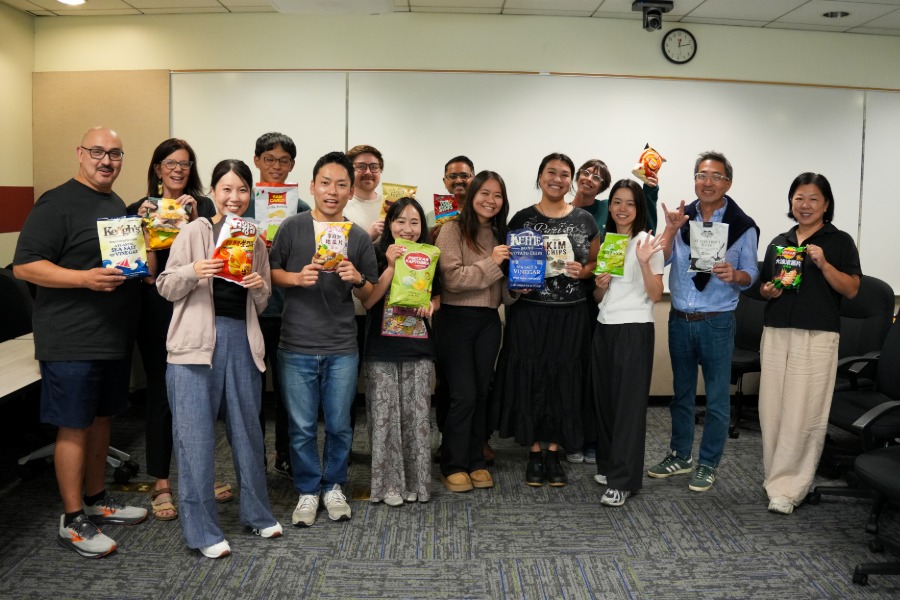
Students in Finding the Future in Food (FFF), the Drucker School’s immersive food-industry program, spent a morning blindfolded, rating twenty-four different potato chips gathered from eighteen countries. The session is a favorite and is led by Dr. Kristine Marin Kawamura, Academic Director for Societal and Global Impact and Clinical Full Professor of Management.
The blindfold removes everything a shopper normally uses. No bag, no logo, no country of origin, no price, no friend who said it was worth trying. What reaches the hand is salt, starch, and whatever a person’s experiences taught them to expect.

A Rating Sheet That Measures the Taster
Cultural background shapes food choices and adjusts the sense of taste itself. Familiarity comes first. Food someone grew up with arrives already approved, and food they did not grow up with can meet resistance before it reaches the tongue. A Korean seaweed chip is an ordinary snack for one student and unfamiliar territory for the person beside them, and a bag of American pork rinds runs the other direction.
Kawamura asked the class whether, once the chips were revealed, they noticed positive or negative biases based on where a chip came from. Students spoke especially about positive associations: familiar flavors, chips they had enjoyed before, and tastes that brought back memories of childhood or other positive experiences.
“Bias is part of being human,” Kawamura said. “We are naturally drawn toward what is familiar, and our past experiences shape what we expect and how we respond. The important thing is to recognize those biases and step back to ask what is influencing our judgment. As managers, we also have to remember that our customers bring their own histories, memories, and associations to every experience. We may never fully know what those are, but we need to understand that they are there.”
Peter Drucker’s idea that a business’s purpose is to create a customer wasn’t a promise that the customer could explain the decision. Consumer research comes back as numbers, and a manager who cannot see their own defaults will read a as a verdict on the product.

What Is Sensory Marketing?
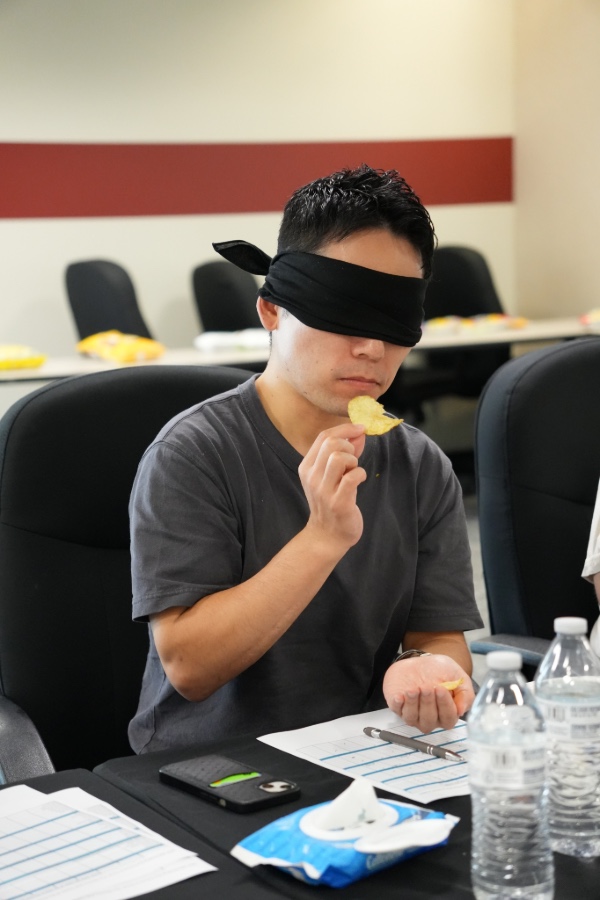
Kawamura works from Aradhna Krishna‘s definition: marketing that engages the senses and, in doing so, shifts perception, judgment, and behavior. Much of a potato chip is designed to do that work. The crunch is engineered, along with the slice thickness, the intensity and bite of the seasoning, the color, the choice of oil, often reflecting what is popular and familiar in a particular country, and even the film of oil left on the fingers. When Kawamura asked what a chip company would want a customer to experience, the answers went well beyond taste. A chip should have a distinctive crunch. It might be large enough to fill your mouth, carry an aroma you recognize, or evoke a memory. The sensory experience is not simply what the customer tastes; it is what the product makes the customer notice, feel, and remember.
Four bags in the tasting belonged to the same brand: Lay’s Classic, Lay’s Asian Spices, Lay’s Salt and Vinegar, and Lay’s Salted Egg, each formulated for a different market. A chip seasoned and bagged where it is sold can be tuned to local expectations of salt and heat.
An imported chip, by contrast, arrives with the sensory profile created for its home market—the flavors, ingredients, textures, and associations familiar to consumers there. Several brands in the tasting made that sense of place explicit: Torres advertises Mediterranean salt, Keogh’s names the Atlantic, and Norway’sFjord chips specify havsnø, or sea snow.
Inside Finding the Future in Food

Hideki Yamawaki, Ito Chair of International Business, Professor of Management, and Faculty
Director of FFF, launched the program as a pilot in December 2024 on the premise that the food industry is best understood in the places it operates. Students take field visits across Los Angeles, the Inland Empire, and Orange County and work on projects with industry partners.
Each cohort brings Drucker and CGU students from diverse cultural backgrounds together with international scholars from a major Japan-based retail corporation. That diversity is part of what makes the tasting so revealing: everyone tastes the same chip, but not everyone experiences it the same way. Each person brings a different cultural foundation, familiarity with particular flavors and ingredients, and a lifetime of memories and associations to the tasting, and those differences can produce strikingly different responses to the very same product.
The chips themselves came from Korean, Indian, Afghan, Turkish, Russian, and Japanese groceries across Los Angeles and Orange County, with a Stater Bros. and a Vons in Claremont for a baseline.
“Everybody loves potato chips. They are the tip of the iceberg,” Yamawaki said. “Beneath them are social, cultural, economic, historical, geographical, market, and many other tacit factors that shape chip flavor across countries. Exploring those is the essence of the FFF program.”
Salt, Sugar, Fat, and Love
Kawamura closed on a slide with four words. The first three explain why a bag empties faster than anyone intends.
The fourth is her own contribution, and the through-line of her scholarship: care as a strategic resource, and cross-cultural understanding built through connection, reflection, and shared experience rather than instruction alone.
“I hope you remember this experience, and the remarkable diversity embodied in something as simple as a potato chip,” Kawamura told the class.
Learn More
The Drucker School teaches management as a human discipline, which includes learning to tell what a market wants from what you assumed it wanted. Explore our graduate programs or reach out to our admissions team to find your path.