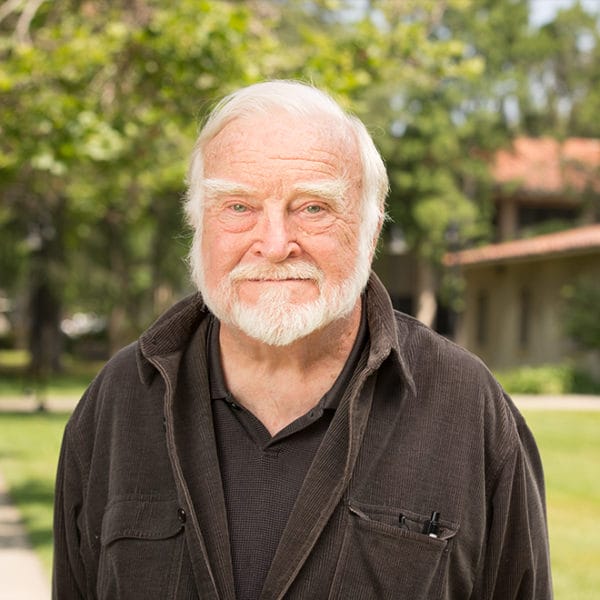
Mihaly Csikszentmihalyi at Claremont Graduate University
Mihaly Csikszentmihalyi (1934–2021) spent the final and, by many accounts, most institutionally influential chapter of his career at Claremont Graduate University (CGU), where he arrived in 1999 after retiring from the University of Chicago. He held the title of Distinguished Professor of Psychology and Management, later formalized as the C.S. and D.J. Davidson Professor of Psychology and Management, with a joint appointment in the Division of Behavioral and Organizational Sciences and the Peter F. Drucker and Masatoshi Ito Graduate School of Management. That dual placement was fitting: Csikszentmihalyi had spent decades studying what made work, and life more broadly, feel meaningful, and CGU gave him a platform to apply those ideas to both psychology and management scholarship at once.
Why Did Mihaly Csikszentmihalyi Move to Claremont Graduate University?
His move to Claremont was not originally intended to reshape the university. According to Stewart Donaldson, the CGU psychology professor who worked alongside him for two decades, Csikszentmihalyi was recruited to Claremont by the Drucker School’s Jean Lipman-Blumen to teach courses in psychology and management following his retirement from Chicago. Word of his presence on campus spread quickly among graduate students, and when he received an offer to launch a research program at the University of Southern California, Donaldson persuaded him to instead build it at CGU. What the two initially imagined as a modest concentration within the Division of Behavioral and Organizational Sciences grew, in Donaldson’s words, into something that “took on an incredible life of its own.”
What Is the Quality of Life Research Center That Csikszentmihalyi Founded at CGU?
That growth centered on the Quality of Life Research Center (QLRC), which Csikszentmihalyi founded at CGU in 1999 and co-directed with psychologist Jeanne Nakamura. The QLRC operates as a nonprofit research institute dedicated to positive psychology — the study of human strengths such as creativity, optimism, intrinsic motivation, and responsibility — and it has served as a base for graduate students, postdoctoral fellows, and visiting scholars from around the world. Housed in offices on Dartmouth Avenue, the center became known less for its physical size than for the accessibility of its founder; colleagues and former students recall that Csikszentmihalyi made himself available to visitors, students, and strangers alike, offering his time generously even as his international reputation grew.
Where Was the First Doctoral Program in Positive Psychology Established?
The first doctoral program in positive psychology was formally established at Claremont Graduate University in the mid-2000s, built by Csikszentmihalyi and Donaldson on the momentum of the QLRC. The program, now offered as a Ph.D. concentration in positive developmental or positive organizational psychology, trained generations of researchers who went on to study flow, engagement, mentoring, and wellbeing in academic and applied settings. Csikszentmihalyi’s own doctoral dissertation research at Chicago, on creativity in the arts, had long informed his interest in graduate training, and at CGU he had the opportunity to institutionalize that interest through a dedicated program rather than individual mentorship alone.
How Did Mihaly Csikszentmihalyi Disrupt and Elevate the Field of Positive Psychology?
Csikszentmihalyi disrupted psychology by pushing the discipline to study human flourishing as rigorously as it had long studied dysfunction, and his influence began well before his CGU years. He is widely known as the pioneering co-founder of positive psychology and as the “father of flow,” a term he coined for the psychological state of optimal performance. Before his work gained traction, psychology as a field had been oriented almost entirely around diagnosing and treating dysfunction; there was little organized effort to study what allowed people to thrive rather than merely to cope. Csikszentmihalyi’s research pushed the discipline to take flourishing seriously as a scientific subject in its own right.
What Role Did Csikszentmihalyi’s Book Flow Play in Founding Positive Psychology?
The foundation for that shift was laid with the 1990 publication of Flow: The Psychology of Optimal Experience, which became a bestseller and introduced a general audience to the idea that deep engagement and enjoyment could be studied empirically rather than treated as unmeasurable byproducts of a well-lived life. His subsequent books, including The Evolving Self, Creativity, and Good Business, extended his theories of flow into new domains, and his method of sampling everyday experience led him to focus more closely on positive states like enjoyment and creativity than many researchers before him had.
How Did Csikszentmihalyi and Martin Seligman Formally Launch Positive Psychology?
That body of work set the stage for what is often described as the formal launch of positive psychology as a subfield. In 2000, Csikszentmihalyi and University of Pennsylvania psychologist Martin Seligman published a widely influential article in American Psychologist, the flagship journal of the American Psychological Association, that introduced the profession to the concept. Seligman, a former APA president, later credited Csikszentmihalyi as instrumental to the thinking behind his own presidential initiative to reorient the field. Seligman went on to describe Csikszentmihalyi as the world’s leading researcher on positive psychology.
What Made Csikszentmihalyi’s Approach to Positive Psychology Scientifically Credible?
What made this disruption stick, rather than fade as a passing trend, was Csikszentmihalyi’s insistence on rigorous measurement. He developed methods for studying attention, flow, and positive experience across roughly three decades of research, using tools like experience sampling to quantify moments of engagement in daily life rather than relying only on retrospective self-report. That combination of humanistic subject matter and quantitative method gave positive psychology credibility inside a discipline that had historically been skeptical of research on happiness and well-being.
The institutional legacy of that disruption is visible directly at CGU. By founding the QLRC and co-creating the first doctoral program in positive psychology, Csikszentmihalyi did more than publish influential ideas — he built the infrastructure that trained the next generation of researchers to carry the field forward, embedding positive psychology into academic training in a way that outlasted any single article or book.
What Awards and Honors Did Csikszentmihalyi Receive During His Time at CGU?
Csikszentmihalyi’s scholarly output continued at a substantial pace during his CGU years, and it brought continued recognition alongside the growing influence of the 2000 American Psychologist article. His CGU affiliation coincided with his election as a Fellow of the American Academy of Arts and Sciences, the 2009 Clifton Strengths Prize, and the 2011 Széchenyi Prize. In 2014, he traveled to Los Angeles to receive the Grand Cross of the Order of Merit of the Republic of Hungary, his native country’s highest civilian honor, presented by Hungary’s minister of human capacities.
How Is Mihaly Csikszentmihalyi Remembered on the Claremont Graduate University Campus?
Colleagues at CGU consistently describe Csikszentmihalyi’s presence on campus as central to the university’s identity in positive psychology research. Donaldson has said he did not fully grasp the scope of Csikszentmihalyi’s international standing until the two attended a European positive psychology conference near Csikszentmihalyi’s birthplace of Rijeka, where crowds gathered outside their hotel and Csikszentmihalyi received a standing ovation before he had spoken a word.
What Is Mihaly Csikszentmihalyi’s Legacy at Claremont Graduate University Today?
Csikszentmihalyi remained affiliated with CGU until his death on October 20, 2021, at his home in Claremont, California, at the age of 87. Following his death, CGU leadership and colleagues in the Division of Behavioral and Organizational Sciences described him as a defining figure in the university’s history, and Nakamura, who continues to co-direct the QLRC, has continued the center’s mission. The doctoral program he helped establish remains one of CGU’s signature offerings, and the Quality of Life Research Center continues to sponsor lectures, convenings, and publications in his honor and in keeping with the research agenda he set in motion.
Further Reading on Mihaly Csikszentmihalyi
- Claremont Graduate University faculty profile
- Wikipedia: Mihaly Csikszentmihalyi
- PositivePsychology.com: Mihaly Csikszentmihalyi, the Father of Flow
- Interview with Mihaly Csikszentmihalyi (PMC/NCBI)
- Flow and the Foundations of Positive Psychology: The Collected Works of Mihaly Csikszentmihalyi (Springer)
- Pursuit of Happiness: Mihaly Csikszentmihalyi profile
- Flow: The Psychology of Optimal Experience (book)