10 Peter Drucker Quotes for Navigating Chaotic and Challenging Times
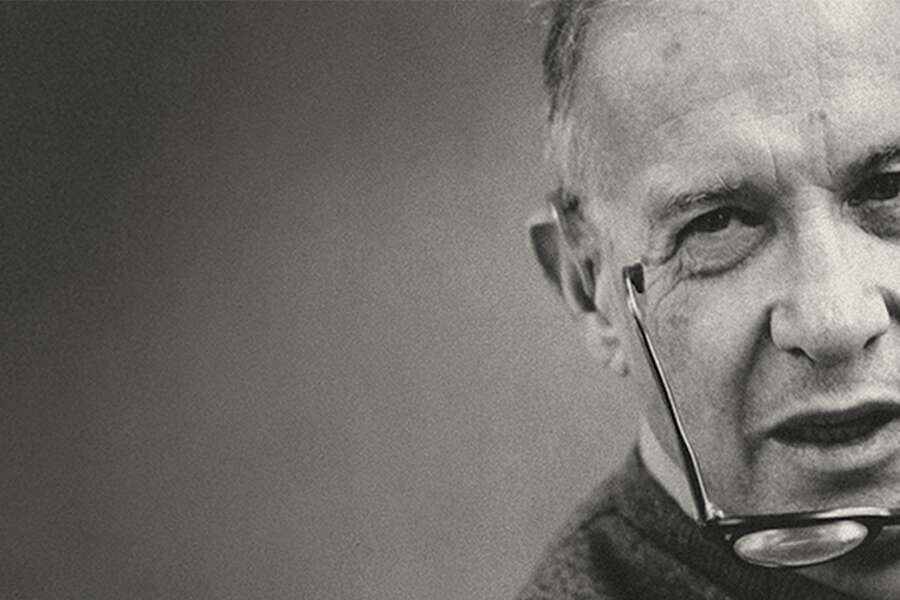
The world today is undoubtedly chaotic and challenging, and some people believe we are living in unprecedented times. Possibly, but Peter Drucker, the father of modern management, who died at age 95 in 2005, might ask us to put things into perspective, and take action from there. The following quotes are great snippets of wisdom for any students or leaders who are looking to emulate Drucker’s legacy:
Focusing on the Now
“Tomorrow is being made today, irrevocably in most cases.” – Managing in Turbulent Times, 1980
Drucker developed his hard-won perspective while writing 40 books. His more than 70 year career as a writer, management consultant and professor, included teaching for more than 30 years at the Peter F. Drucker Graduate School of Management at Claremont Graduate University.
Most likely, your professional role as a leader, manager, individual contributor or team member makes you a knowledge worker, far-sighted terminology Drucker created in the late 1950s. As a guide for how to approach and work beyond today’s chaos and challenges, contemplate and apply insights from the ten Drucker quotes compiled below.
“Yet surely this is a time to make the future– precisely because everything is in flux. This is a time for action.” – Post-Capitalist Society, 1993
Each quote is followed by the name of the book it appeared in, and the year of publication. The quotes are divided into two sections: Focusing on the Now, and Preparing for the Future. Drucker’s messages apply to individuals and organizations; not just to businesses, but also to sectors such as nonprofits, government, academia, and the military.
“There are hidden opportunities in developments that seem to threaten a business or an industry.” – Managing for Results, 1964
This book contains one of the early uses of Drucker’s famous phrase “the future that has already happened.” This insight taught that the future could already be glimpsed today, by the effects of things that are, in effect, history. Yet those full effects have not yet been felt. How can you turn current problems and threats into new skills, organizations, products, and services for the benefit of your organization, community, and society?
“Problems go away because someone does something about them.” – Management: Tasks, Responsibilities, Practices, 1974
Many knowledge workers think of problem-solving in the abstract, and wait for other people to step in when trouble arises. This Drucker quote, from his classic 839 page compendium of wisdom, provides clear focus to the words of the book’s subtitle.
“If we want the new to have a chance, we must be willing to prune the old that no longer promises results.” – Managing for Results, 1964
This quote reflects Drucker’s long-held belief in what he termed “systematic abandonment.” We must reflect on our life and work, and stop doing what is no longer useful, to make way for something that can be. Knowing what we know now, if we weren’t already engaged in this activity, would we begin doing it? In many cases, the answer is no.
“The large organization has to learn to innovate, or it won’t survive.” – Managing in the Next Society, 2002
Seventeen years before this book was published came Drucker’s classic Innovation and Entrepreneurship. This warning about large organizations and innovation, early in the new century, turned out to be a prophecy. Whether or not we lead, manage, or work in a large organization; it has become inescapable that innovation is now a requirement for thriving organizations of all types.
“To survive and succeed, every organization will have to turn itself into a change agent.” – A Functioning Society, 2003
Drucker believed that change was normal and not to be feared, thus the need for leaders to become change agents, so their organizations can be thought of in those terms. What is required, Drucker believed, is that organizations should be organized for change, while providing underlying continuity for the people who work there.
Preparing for the Future
“The future will not just happen if one wishes hard enough.” – Management: Tasks, Responsibilities, Practices, 1974
A compelling future demands hard work today, leaving as little to chance as possible. It requires serious thought and deliberation to decide what kind of future we want to live in, and how it can become a reality. Everyone in the organization should become and remain forward-thinking.
“In turbulent times, managers cannot assume that tomorrow will be an extension of today.” – Managing in Turbulent Times, 1980
As leaders and managers study trends, events, the news media, social media, and other sources for clues to the future, they often stop too soon, in Drucker’s estimation. They should take another step, asking what does this mean specifically for individuals and the organization? Consider the potential impact on a wide set of stakeholders, inside and outside the organization.
“Tomorrow is being made today, irrevocably in most cases.” – Managing in Turbulent Times, 1980
Drucker believed that managers and leaders had to understand their present reality before they could make informed decisions about the future. But that future is reliant on our thoughts, actions, and priorities of today. Preceding the quote above is Drucker’s assertion that “all institutions live and perform in two time periods, that of today and that of tomorrow.”
“To get at the new and better, you have to throw out the old, outworn, obsolete, no longer productive, as well as the mistakes, failure and misdirections of effort of the past.” – Managing for the Future, 1992
This quote is also reminiscent of systematic abandonment, but it goes beyond that concept. It applies to both individuals and organizations. Take regular, honest self-assessments to inform not only about what is not working, but what is holding you down, and holding you back, from achieving a brighter future.
“Yet surely this is a time to make the future– precisely because everything is in flux. This is a time for action.” – Post-Capitalist Society, 1993
More than thirty years ago, at the end of the introduction of this prescient and wide-ranging book, Drucker pointed out that what can seem chaotic and challenging should not be an impediment to creating a better future. This means we should start now, in the present moment, working with whatever assets and advantages we have, while focusing on the positive. What can we put into place, individually and organizationally, that will lead to a better tomorrow?
The Drucker School of Management exemplifies the concepts underlying these quotes. Its faculty and staff has long realized that in order to differentiate itself, it has to continually help students find and maintain an edge in an ever-changing world.
And the world will probably remain chaotic and challenging for the foreseeable future. The Peter Drucker quotes above should be seen as practical, hopeful, and useful. They can spark a bias for action and a return to first principles. This means taking initiative with a positive attitude toward meeting the challenges of today and tomorrow.
Bruce Rosenstein is Managing Editor of Leader to Leader, published by Wiley and The Frances Hesselbein Leadership Forum. He is the author of Create Your Future the Peter Drucker Way (2013), and Living in More Than One World: How Peter Drucker’s Wisdom Can Inspire and Transform Your Life (2009). He writes “The Peter Drucker Files” blog for Psychology Today, and has studied Drucker’s work for more than 35 years. He worked for USA TODAY from 1987–2008, and was a longtime adjunct professor at The Catholic University of America Department of Information Sciences.