Turning Ideas into Impact at CGU Hacks 2025
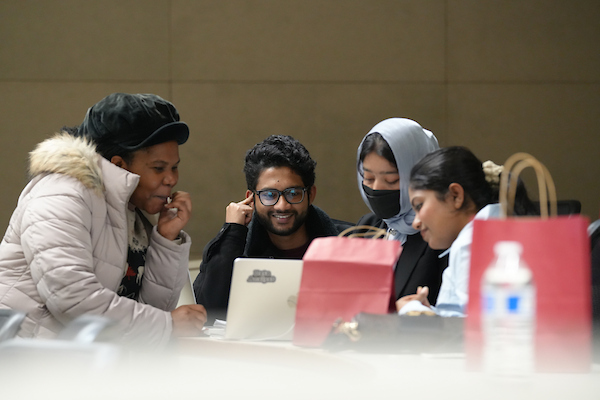
At this year’s CGU Hacks 2025 — an AI hackathon hosted jointly by the Center for Information Systems & Technology, the Drucker School of Management, and the Transdisciplinary Studies program — students were challenged to use technology to solve real-world problems with people at the center.
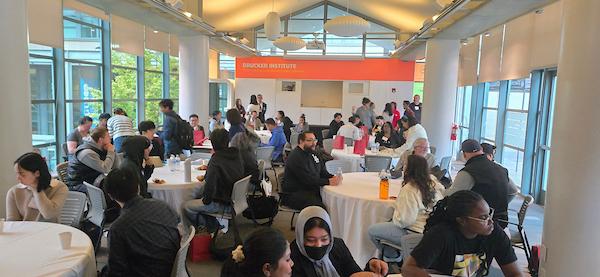
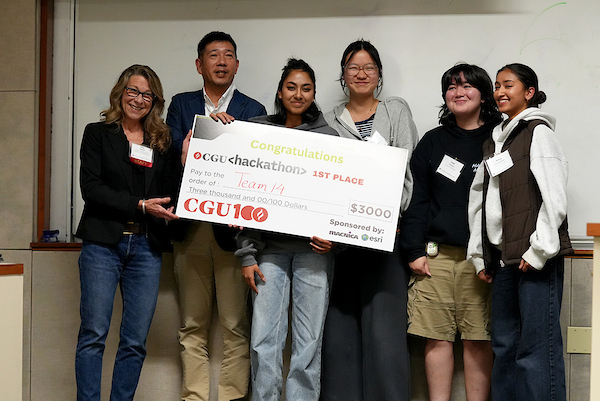
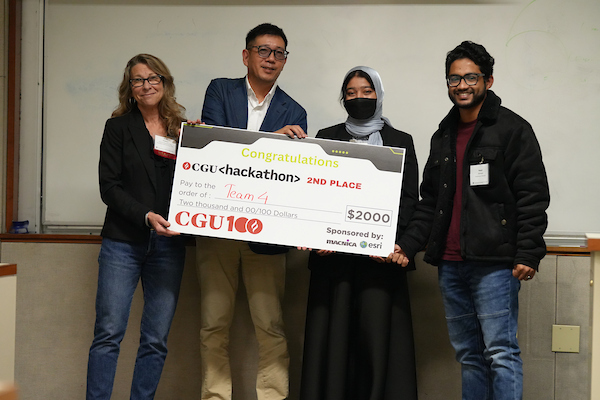
SafeNest, a maternal health platform created by students Aditi Gargeshwari, Kavya Ummethala, Claire Wang, and Leah Uriarte, took top honors for helping pregnant individuals make more informed decisions about their health and safety. Second place went to Anika and the Secret of the Cloud, a multilingual, research-backed storymap book developed by Nabil Ahmed and teammates that teaches children and teens about digital ethics and online safety through accessible visual storytelling.
Over the course of the weekend, CGU’s Burkle Family Building was transformed from a quiet academic space into a hive of high-tech activity, as teams sketched, coded, and debated their way toward working prototypes.
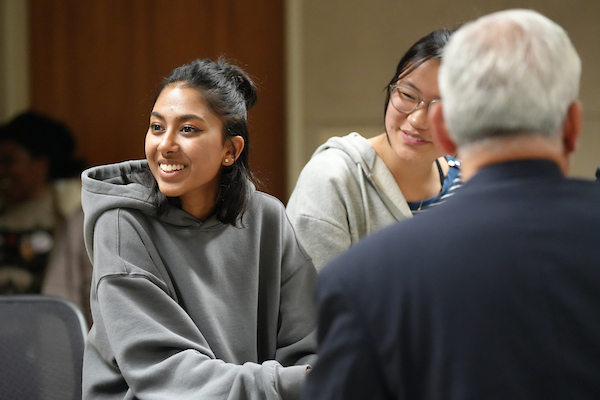
Seventeen teams — about 70 participants in total — took part, representing more than ten institutions, including Claremont Graduate University, the Claremont Colleges, University of California, San Diego (UCSD), the University of Redlands, and California State University, Long Beach (CSULB), as well as industry professionals. Transdisciplinarity was on full display, with participants from fields such as AI and machine learning, GIS, cybersecurity, psychology, public health, humanities, business, and data science working side by side.
The event sought to find out what happens when you bring technologists, designers, policy thinkers, and storytellers into the same room and give them a shared challenge aimed at real-world impact. Instead of working in isolation, participants were pushed to think about who they were designing for and what kinds of problems were worth solving.
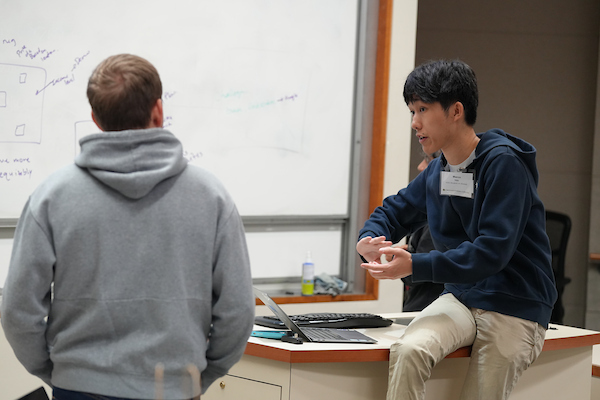
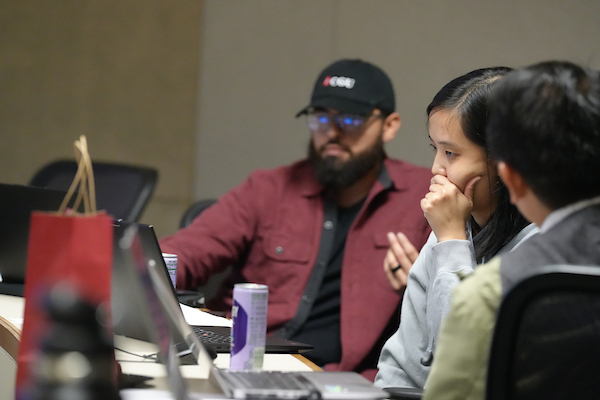
Participants chose from four tracks — Artificial Intelligence, GeoAI, Cybersecurity, and UI/UX Design — all aimed at building solutions that were not only innovative but socially responsible and human-centered.
Industry mentors and judges from organizations like Esri and Intel joined CGU faculty to evaluate projects using a rubric that emphasized real-world impact, user safety, transparency, and strong storytelling, reminding teams that how you explain and deploy technology matters as much as what you build.
The result was a weekend of productive collaboration. Some teams arrived with well-formed technical skill sets; others brought domain knowledge in health, education, or social impact. Many participants weren’t coders at all. Throughout the event, they learned to lean on each other’s strengths, prototyped quickly, and kept end users at the center of their decisions.
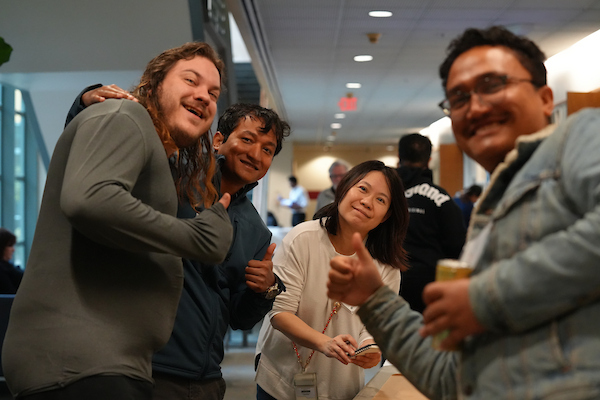
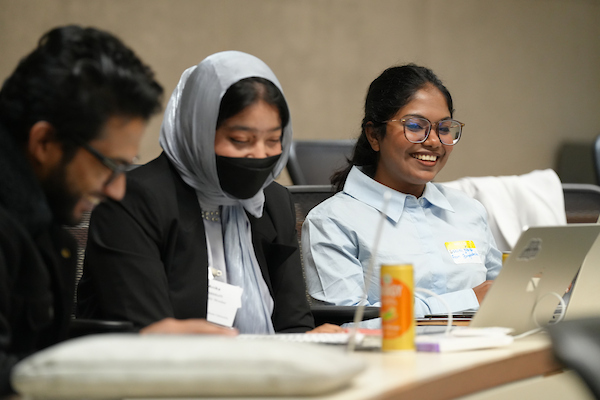
For the SafeNest team, that user focus was the starting point. They asked how they could make pregnancy less uncertain and isolating, especially for people facing barriers to care. Reflecting on the motivation behind the project in a LinkedIn post, Gargeshwari wrote, “Millions of pregnant individuals every year navigate their journey with great uncertainty and difficulty – especially those who are uninsured, live in areas with dangerous environmental conditions, aren’t sure how to interpret complex medical documents, or don’t know who to seek advice from.”
SafeNest looks to bring several tools together in one place to support pregnant individuals:
- An environmental risk map that shows where local air quality and other conditions may pose risks to pregnancy and offers location-based recommendations.
- Interactive clinic finder powered by an AI assistant that helps users discover nearby clinics, understand their options, and view them in the context of the risk map.
- A community forum that connects people by region so they can share experiences, ask questions, and learn from one another.
- A document helper that uses AI to translate dense medical paperwork into clear, everyday language.
While SafeNest focused on maternal health, Anika and the Secret of the Cloud approached digital ethics from a different angle. Developed by Nabil Ahmed and teammates, the multilingual, research-backed storymap book uses accessible visual storytelling to help children and teens understand how technology, data, and AI shape their lives, including concepts like data flow, cyberbullying, deepfakes, and AI misuse.
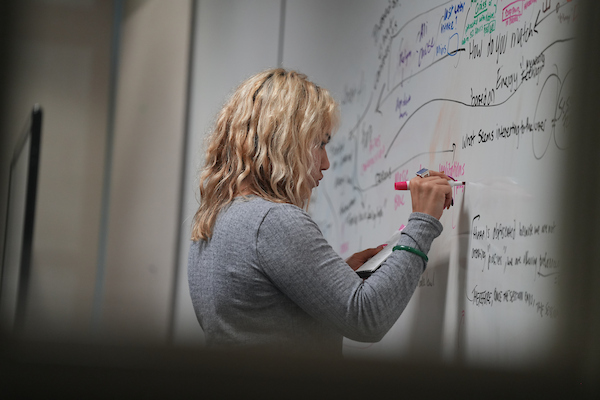
Other winning teams across the GeoAI, AI, Cybersecurity, and UI/UX tracks likewise showed how emerging technologies can be guided toward public good, whether by safeguarding digital systems, making interfaces more accessible, or illuminating complex data in ways real people can actually use.