Education as Transformation: A Conversation with Romarilyn Ralston
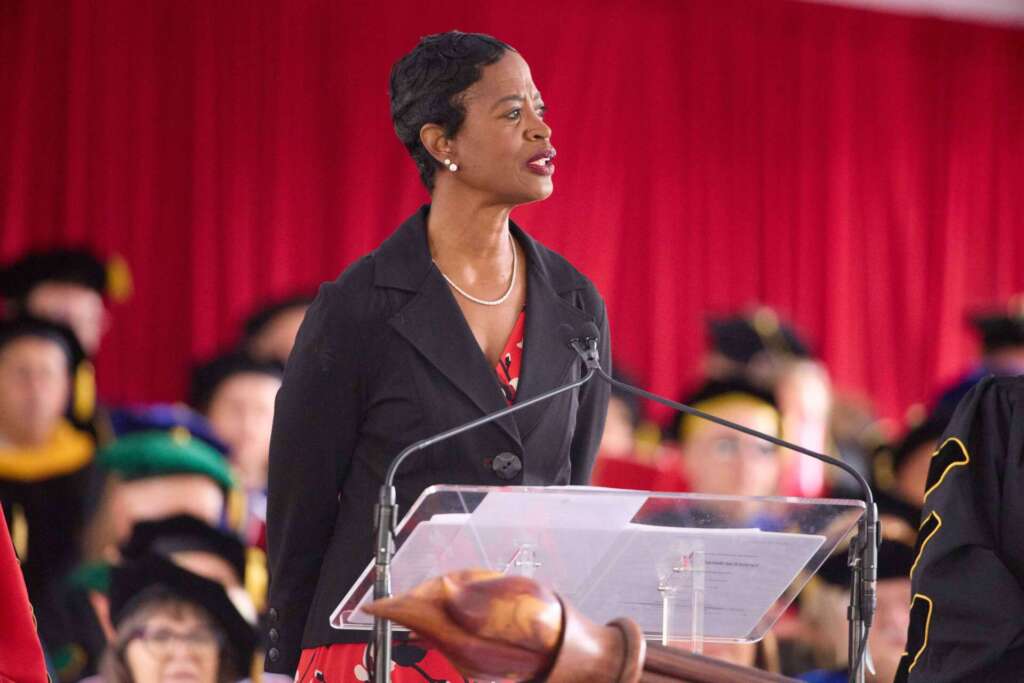
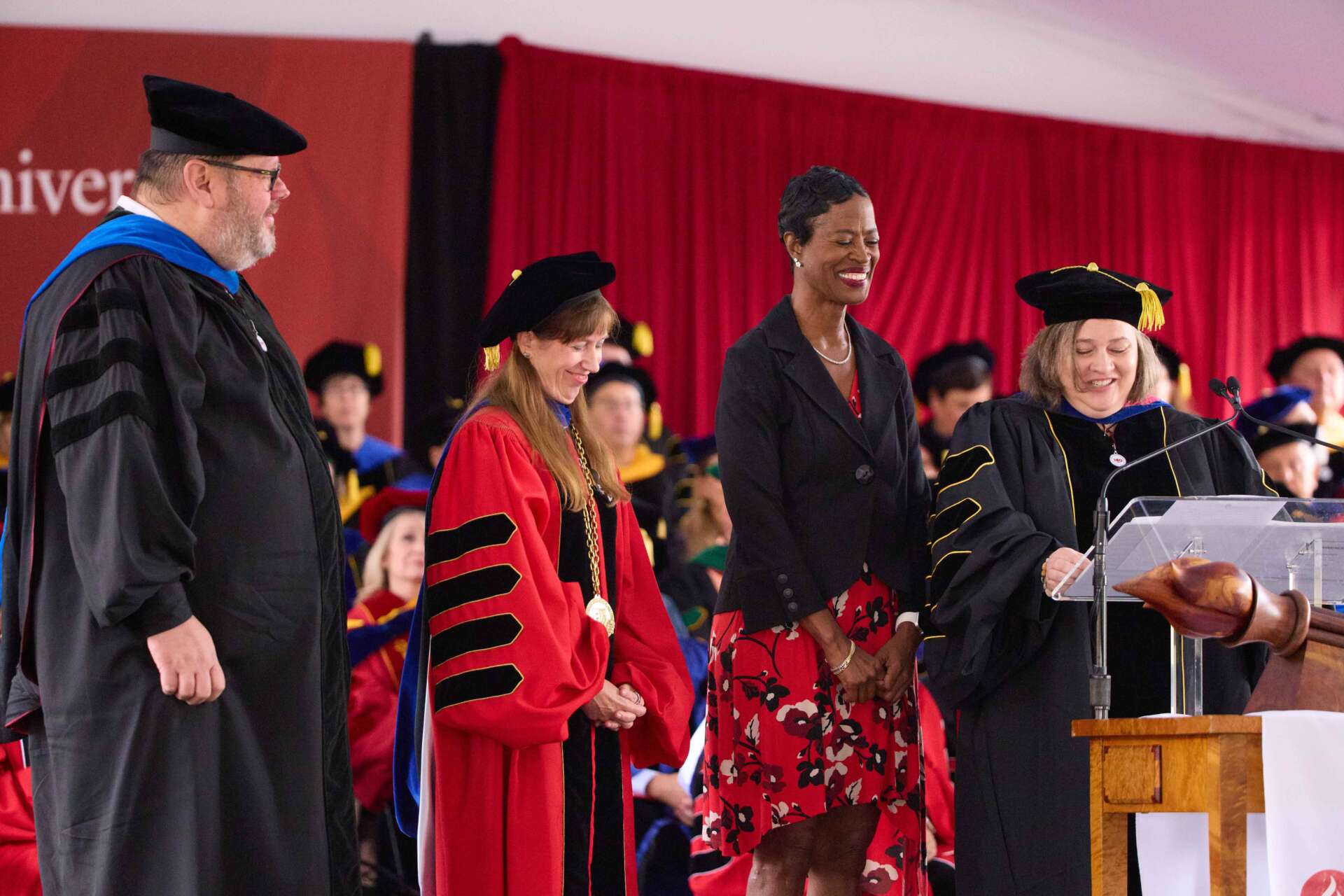
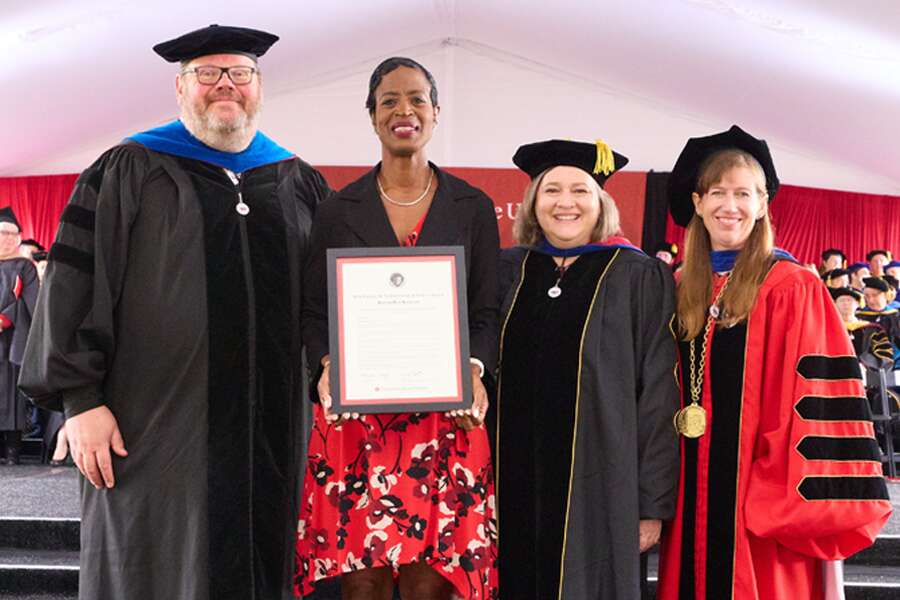
Romarilyn Ralston is a PhD candidate in executive management at the Drucker School of Management at Claremont Graduate University (CGU), where her work sits at the intersection of leadership, higher education, and justice. She has dedicated her career to expanding educational access for incarcerated and returning citizens — most recently as senior director of the Justice Education Center for the Claremont Colleges at Pitzer College, and now as executive director of the UCLA Prison Education Program and Center for Justice. This year, she was named one of two recipients of CGU’s Dream and Believe Award, which recognizes doctoral students whose lives and scholarship embody resilience, purpose, and transformative impact.
Alegria Martinez: What was it like to sit with that news leading up to the moment, and what was going through your mind when you actually heard your name called?
Romarilyn Ralston: Well, I had been told that I would be giving a speech about the amazing work of Professor Reichard. She’s incredible, we’re both from Missouri, from the Midwest. She’s been so instrumental in the inaugural cohort of the EPHD program, just an incredible human being. We share many of the same values regarding underrepresented groups and leadership. So, I said yes right away.
As soon as Andrew texted me and we had a call, I said, “Of course, I’ll say a few words.” And then I didn’t realize the graduation was on a Saturday. I had other obligations, a flight to St. Louis, and I had to reschedule some things. And then I get an award. I was like, “OK, I’m glad I didn’t say no.”
AM: You kept your educational dreams alive through over 20 years of incarceration, before any program existed for you, before a degree was really possible. What did it mean to you to hold onto education during that time?
RR: Education is really powerful and transformative. To have the opportunity to take a college course inside, and then have the Crime Bill of ’94, signed into law by Clinton, remove Pell grants from incarcerated students, it was a blow. Students across the country who were behind prison walls, tens of thousands of people taking college courses as part of their rehabilitation, lost access to colleges because colleges could no longer get tuition for teaching in prisons.
For many years, you kind of think that your life is on hold, on hold for the mere fact that you’re incarcerated. And then, when programs leave, you just feel like, what am I going to do when I get out? But like I said on the platform on Saturday, when I left prison, I landed in Claremont, the city of trees and PhDs. So, I took it as a sign that I was on the right path.
AM: What does this work tell you about what people inside actually need, and what institutions are still slow to understand?
RR: Over the years, I’ve come to believe that incarcerated people are just that, serving their time. Many of them haven’t given up on life. They come from supportive families. Many have degrees already, or were business owners, mothers and fathers, come from supportive communities, and something happened in their lives that put them on this path. When given the opportunity, folks rise above their circumstances. I’ve seen it happen hundreds and hundreds of times. Give a person a chance to go to school, to create a business, to teach and facilitate a skill, and folks do that.
The stigma and stereotypes that surround incarceration and incarcerated people are oftentimes, it’s just not true. That’s been my experience. Being in this work has been so rewarding, not only because I’ve been able to change my own life through the power of higher education, but also because I’ve watched others do the same. So, I know I’m not a unicorn or some exception to the rule; this is the power of education. When done right, it changes lives. I see it over and over again, and it’s amazing that I get to help people along the way.
AM: You’re in your second year as a PhD student at the Drucker School. What drew you to Drucker specifically, and what do you think that training offers someone doing this work at this scale?
RR: I was sitting in my office at the time. I was the executive director of Project Rebound at Cal State Fullerton. I’m not sure exactly what prompted it, but I have friends at the Claremont Colleges, and Linda Perkins has been a part of my life for 20 years. I remember applying for the senior director position at the Justice Education Center at Pitzer College and thinking, “I’m going to Claremont, this might be an opportunity for me to take some classes.”
I started looking at CGU, and I wasn’t necessarily interested in management; I was interested in leadership. I didn’t know there was a degree that actually incorporated both. Then I looked at the faculty and ran across Becky’s profile, and I said, “Wow, she is incredible.” So many other amazing faculty members, too. I applied, and Michael was so easy to talk to, supportive, and encouraging. When I got the offer from Pitzer, I just took it as a sign.
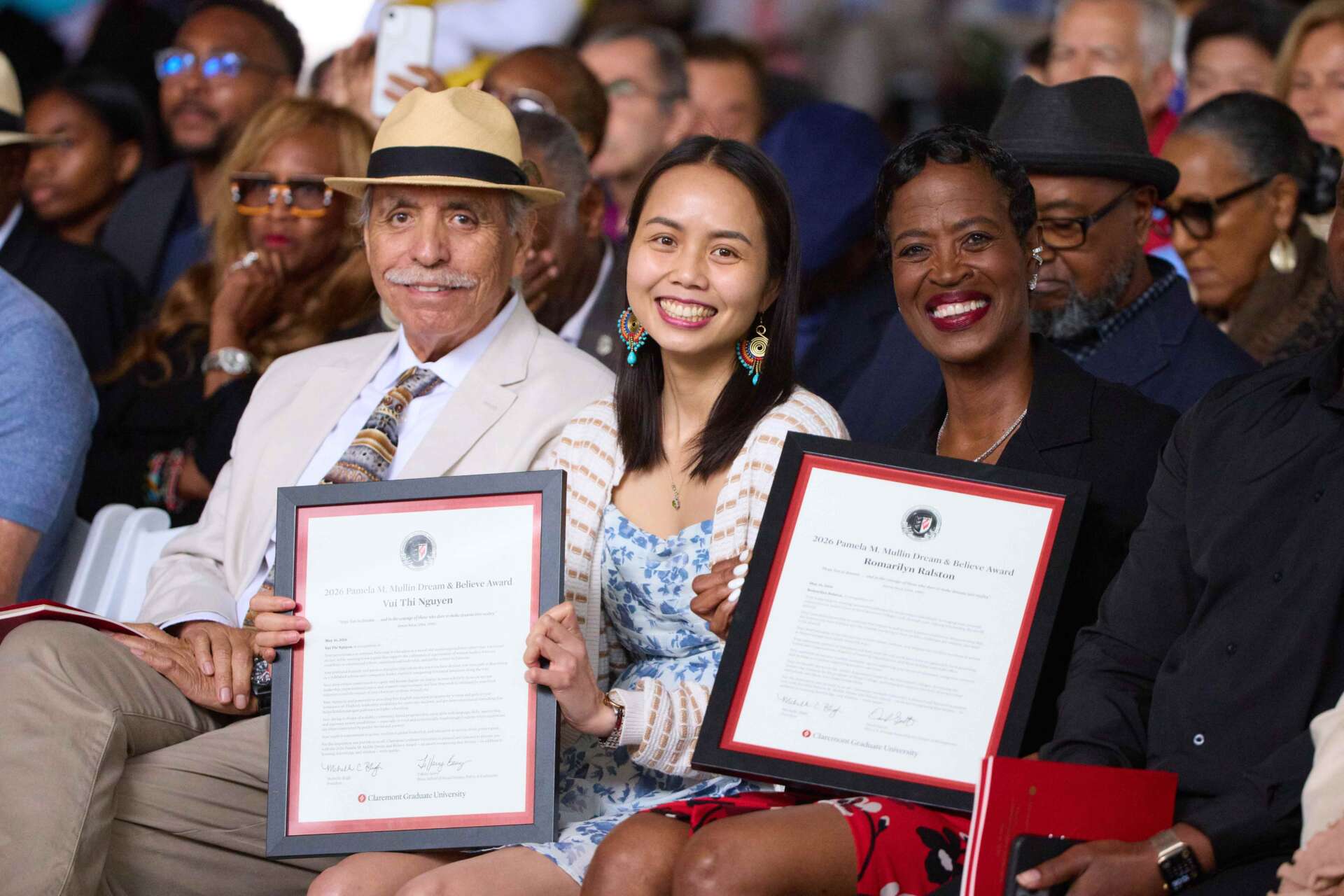
AM: The Dream and Believe Award comes with real financial support for your doctoral work. What does having that resource mean for what you’re building next?
RR: It is a weight lifted off my shoulders. I’ve been stressed since I left the Claremont Colleges and came to UCLA. I no longer have the tuition remission and financial support I received as staff at Pitzer; now I have to pay 100% out of pocket. I thought, maybe I’m just going to have to take a couple of gap years. And then I had a conversation with myself and said, “If you take a couple of gap years, you’re not coming back.” I had to face that reality and be honest with myself.
I said, “I’ll finish spring and then decide whether I can continue financially.” And then this happened. So, it’s a God thing; it is definitely the universe, from beginning to end, opening doors for me. From 15 years ago, when I came home and landed in Claremont, to meeting Linda in 2005, to paroling to Claremont in 2011, to getting accepted to Pitzer College in 2012, then working at Pitzer in 2024, and now at CGU, it’s just a full-circle moment. I can see how things have been connected, orchestrated, and woven together by the universe.
Romarilyn’s path, from twenty years inside to a doctoral candidate leading justice-focused education programs at UCLA, is a reminder of what’s possible when people are given a real chance to learn and lead. If her story speaks to you, learn more about the Drucker School of Management and explore the doctoral, master’s, and certificate programs that prepare leaders like her to drive change from the inside out. Our admissions team is ready to talk through your path, wherever you’re starting from. We are the Future of Management, and futures like Romarilyn’s are exactly why.