In a Fragmented World, Flow Is the Antidote
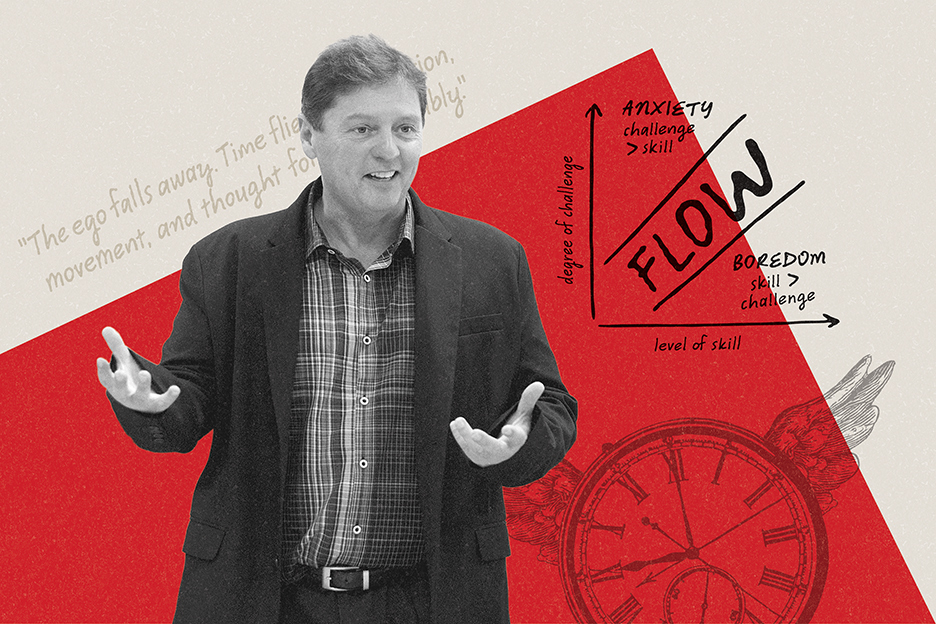
The concept of “flow” is aN EMERGING online trend, but at Claremont Graduate University, where flow was first researched, professors have been studying it for decades.
On the surface, a table tennis match and a breakthrough research session seem to have little in common. But according to Professor Stewart Donaldson, they share something essential: “flow,” the state of complete absorption in a demanding task, where time dissolves and performance peaks.
Once confined to academic journals, the concept is now everywhere: trending on TikTok, debated in productivity podcasts, and showing up in the vocabulary of everyone from elite athletes to remote workers trying to reclaim their attention.
A January 2026 feature in The Athletic explored table tennis as one of the fastest pathways into flow, citing the foundational research of Donaldson’s late colleague Mihaly Csikszentmihalyi and athletes who described the game as a near-instant route to hyper-focused presence.
And as anxiety, digital distraction, and what researchers now call the “time confetti” of modern life intensifies, that kind of deep focus is attracting renewed attention across sports, medicine, education, and organizational science. For Donaldson, the moment feels familiar and long overdue.
A Claremont Legacy
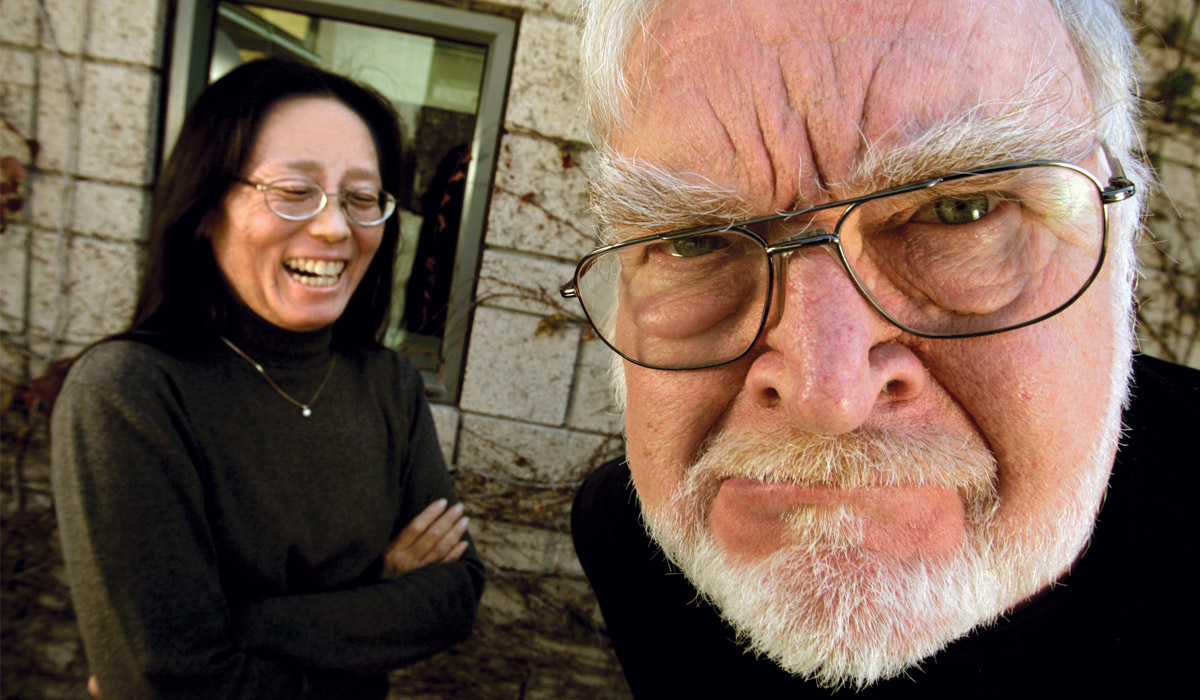
Donaldson’s connection to flow is institutional as well as intellectual. In 2007, he and Csikszentmihalyi, along with colleague Jeanne Nakamura, developed and launched the first doctoral programs in Positive Psychology at CGU: Positive Developmental Psychology and Positive Organizational Psychology. Flow is a cornerstone concept in both programs, and CGU has trained hundreds of positive psychologists in the decades since.
Csikszentmihalyi, widely regarded as the father of flow research, first described the phenomenon in the 1970s after studying artists, chess players, rock climbers, and others who reported losing themselves completely in their work. Although Csikszentmihalyi passed in 2021, the concept continued to permeate culture and eventually entered sports vocabulary as “being in the zone,” a state of mind that athletes like Steph Curry have described as one in which time seems to slow and every shot feels inevitable.
“It’s a perceptual experience that people report when they’re in their peak performance,” Donaldson said.
Why Is Flow Trending Now?
The resurgence of interest in flow is not accidental. Donaldson points to social psychologist Jonathan Haidt’s research on the “anxious generation” — the documented rise of anxiety and reduced well-being, particularly among young people who spend significant time on social media.
“Our lives have become totally fragmented,” Donaldson said. “We have so many different things now competing for our attention that our life is no longer rich, deep, and focused. Flow is, in many ways, the antidote to this fragmented life, what we sometimes call ‘time confetti.'”
Research in the field organizes human experience into three dominant states: anxiety, boredom, and flow. According to Donaldson, many of the most troubling behavioral patterns in society, from youth disengagement to workplace dysfunction, originate in states of anxiety and boredom. Flow, by contrast, is where productivity, creativity, and well-being converge.
The gold standard for measuring it, he said, is experience sampling methodology, random prompts delivered throughout the day, typically via smartphone, that ask participants to record what they are doing and how they feel. Analyzed over weeks, these data reveal stark patterns in how much time individuals spend in each of the three states.
Not All Absorption Is Equal
One of the more consequential distinctions in current flow research is the concept of “junk flow:” experiences that mimic the surface qualities of flow without delivering its benefits.
“In the true flow state, you are accomplishing things and experiencing what we call growth, usually growth in skills,” Donaldson said. “What you’re working on in the junk flow state, you don’t get that generative positive effect of improving what you’re doing.”
“Flow is, in many ways, the antidote to this fragmented life…” – Professor Stewart Donaldson
Scrolling social media, binge-watching content, or engaging in risky behaviors for stimulation can produce a temporary shift in consciousness that resembles the absorption of flow, but without the skill development, focus, or productive outcomes that define the genuine state. The irony, Donaldson noted, is that the phrase “flow on demand” can inadvertently point people toward junk flow rather than the genuine article.
“If you want to get this on-demand change in your state of mind, it’s easy to do things that we call junk flow to try to reduce that anxiety state,” he said.
Designing for Flow
The practical implications of flow research extend well beyond sports and into the architecture of daily life. Donaldson works with executives and organizations to redesign calendars and workflow structures around what he calls flow-friendly conditions, adequate blocks of uninterrupted time, grouped topics that minimize cognitive switching, and protection of the deepest work from the fragmentation of back-to-back meetings.

“If you look at your calendar for the day and you have a meeting, a little bit of break, another meeting, maybe several back-to-back — that’s a terrible day in terms of flow,” he said. “There is no time when you can really sit down, get focused, get deep, and get something done.”
The same principle applies to children. Research shows that young people are naturally more inclined to flow than adults, but that structured, performance-oriented environments can strip it away.
“When kids are playing together without a lot of structure and making up the games and the topics, you can see just really a great flow state with learning and social connection,” Donaldson said. “But the minute you develop a more performant environment, they get much more anxious or bored.”
Boredom, he noted, is one of the most significant and underappreciated threats to educational development and long-term career success.
Flow at Scale
Donaldson and his colleagues at CGU are not content to keep these findings inside the academy. The Claremont Flourishing Center, funded by the Rekhi Foundation for the Science of Happiness, is actively translating 25 years of Positive Psychology research into practical curricula for universities worldwide. More than 70 institutions are currently in partnership with the center.
The initiative’s flagship text, “Perma+4: Building Blocks for Human Flourishing,” summarizes the science and provides exercises for developing each component of flourishing, including engagement and flow.
A companion volume, “Flow 2.0,” addresses the specific challenges of achieving deep focus in the digital age; a Chinese edition has recently been released, and a Japanese translation is forthcoming.
For a generation drowning in notifications, algorithmic content, and the ambient hum of anxiety, that finding may be the most hopeful thing that positive psychology has to offer: the capacity to flourish is not fixed. It can be learned, practiced, and designed for, one deep, focused, fully present moment at a time.
For more information on flow research and the science of flourishing, visit the Claremont Flourishing Center.