Higher Education Needs Transdisciplinary Leaders: Ayanna Howard Is Stepping in for Spelman
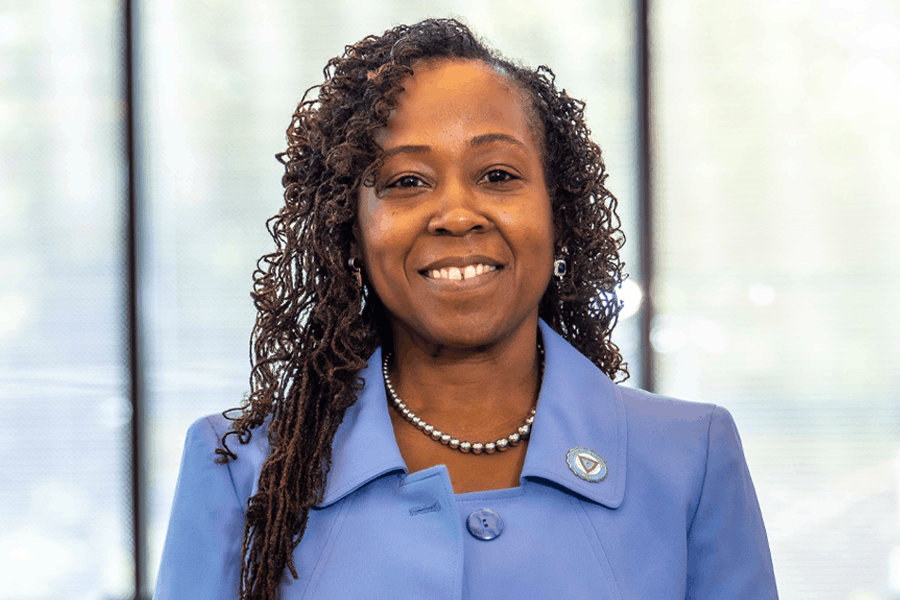
For most of her career, Dr. Ayanna Howard has been difficult to categorize. She’s an engineer and roboticist who helped develop technologies at NASA’s Jet Propulsion Laboratory, an artificial intelligence researcher whose work has explored bias in machine learning and designed technologies for children with disabilities, and a successful entrepreneur who most recently served as dean of The Ohio State University’s College of Engineering, leading one of the nation’s largest engineering programs.
On August 1, Howard began another chapter in her career journey as president of Spelman College, the nation’s premier historically Black college for women. To many observers, the move from leading a 10,000-student engineering college at one of America’s largest public universities to leading a top liberal arts institution of roughly 2,700 students may seem like an unexpected turn. Howard, though, sees something entirely different. “I fit in no one’s box and fit in everyone’s box,” she says with a laugh.
This isn’t just a clever tagline to describe her unconventional career moves. It’s the philosophy that has shaped nearly every professional decision she’s made. “I’m classically trained as an engineer and computer scientist,” she explains. “But I also write. I dance. I consider myself a creative. I intentionally chose to attend an undergraduate institution with a strong liberal arts focus [Brown University] because I’ve always believed that STEM and the humanities belong together.”
Looking back, Howard says every role she has accepted, even those that seemed disconnected at the time, prepared her for this moment. “When I think about all of my experiences — from startups to NASA to being dean at Ohio State — they’ve all given me different skill sets,” she says. “Now, if you put a problem on my table, I can pretty much see what it is and what needs to happen.” That broad perspective, she believes, is exactly what higher education needs at a moment of extraordinary change.
A Career Built Around Opening Doors
Ask Howard what accomplishment makes her proudest, and she doesn’t mention awards, patents, or prestigious appointments. Instead, she talks about people. “The thing that gives me the most pride,” she says, “is that I’ve always tried to go into rooms, break down barriers, and make room at the table for others.” She sees that commitment running through every stage of her career, whether designing technologies for children with disabilities, mentoring future engineers, leading one of the country’s largest engineering colleges, or preparing to guide Spelman into its next chapter. “That’s my legacy,” she says. “That’s what I’ve always tried to do.”
That same philosophy influenced another pivotal decision years earlier: earning an MBA from CGU’s Peter F. Drucker and Masatoshi Ito Graduate School of Management. At the time, Howard was working at NASA’s Jet Propulsion Laboratory in Pasadena, California, and wanted to strengthen her leadership skills without stepping away from the work she loved. She explored several well-known MBA programs but found herself drawn to Drucker’s distinctive approach. “I knew I wanted an MBA,” she recalls, “but I didn’t want to give up my job. Drucker offered me the opportunity to be a part-time student while still feeling like a full-time student.”
Even more important was the school’s philosophy. “Many MBA programs were preparing people to become CEOs or CTOs,” she says. “That wasn’t how I saw myself. I was leading scientists. I wasn’t focused on maximizing profits. I needed to understand how to lead creative, highly talented people.” At Drucker, she found courses that addressed exactly those questions. “I remember taking a class on managing creative people,” she says. “I thought, ‘That’s it. Those are my engineers.’ How do you motivate brilliant people? How do you create incentives for them? Those were the kinds of questions Drucker helped answer.”
Howard also remembers being challenged in unexpected ways. One of her favorite professors, Jeremy Hunter, introduced mindfulness into management education long before it became commonplace. “I remember thinking, ‘How can this be a business class?’” She says, laughing. “And it gave me such a deeper appreciation of the challenges facing leaders in any field and how to respond to them in beneficial ways.” Today, she still draws on lessons she learned in those classrooms, explaining that all of it “has continued to help me throughout my career.” Despite the busy nature of her life, she has also recognized the value of keeping in touch with mentors like Hunter.
For Michelle Bligh, who serves as interim CGU president, Howard’s connection with Hunter and other faculty isn’t the exception to the rule; it’s the norm. “One of CGU’s great strengths and a real point of pride is that so many of our graduates foster academic connections that last,” she says. “Dr. Howard’s experience is an inspiring example of the kinds of mentorship and relationships that aren’t possible at many schools. The bonds you create at CGU don’t end once you leave. As her experience suggests, you’re still a part of the CGU family.”
Leading Through Disruption
Howard assumes the presidency of Spelman during one of the most challenging periods higher education has faced in decades. Colleges and universities are grappling with affordability, demographic shifts, evolving public confidence, rapid technological disruption, and the accelerating influence of artificial intelligence. Rather than seeing uncertainty, Howard sees opportunity. “When I think about higher education,” she says, “I think about its ability to uplift entire communities.”
Such vision was behind Spelman’s selection of Howard. “Dr. Howard is the visionary leader Spelman needs at this pivotal moment in our history,” Lovette Russell, chair of the Spelman College Board of Trustees, said in an announcement about her selection. “Throughout this search process, we sought a leader who would honor Spelman’s legacy while boldly advancing our future, and Dr. Howard embodies that vision.”
Whether a student is attending Spelman or elsewhere, their college degree, Howard says, still has the power to change far more than just their future. “You may have one person in a family go to college,” she explains, “but it can transform generations.” That promise, however, comes with difficult realities: institutions must find ways to make education more affordable while maintaining quality, supporting faculty, investing in students, and preparing graduates for careers that often don’t yet exist. “We’re training students for jobs today,” Howard says, “but we’re also preparing them for jobs 20 or 30 years from now — jobs that don’t even exist yet.” That’s why she believes higher education must teach something more enduring than technical skills. “It trains students based on the psychology of judgment,” she says. “It helps them understand ethics. It prepares them to make good decisions.” Those qualities, she believes, will become even more valuable as artificial intelligence continues reshaping society.
Keeping Humanity at the Center
Few people have watched AI evolve as closely as Howard. She admits that even experts were stunned by the release of ChatGPT in late 2022 and its widespread popularity. “If anyone in AI tells you they weren’t surprised by the public reaction,” she says, “they’re lying.” The underlying technology behind ChatGPT wasn’t new, she explains; researchers had been working with large language models for years. “But what surprised everyone was the slapping of a conversational interface on top of it and then watching it spread overnight,” she says.
While she remains optimistic about AI’s potential, Howard worries that society is embracing the technology faster than it’s considering its consequences. “My research has focused on bias,” she says. “What I fear most is that by the time humanity realizes it’s given up too much autonomy to these systems, it will be too late.” Those concerns form the foundation of her forthcoming book, Rebooting the Machines, scheduled for publication this fall. Rather than arguing for or against artificial intelligence, the book encourages readers to understand how these systems work, why they were built, and how individuals can maintain agency when using them. “I want people to understand the history,” Howard says. “And I want to give them practical tools so they don’t fall into an overtrust scenario.”
The book’s message reflects her broader belief that technology should enhance human judgment, not replace it. As AI becomes increasingly powerful, Howard believes the humanities and liberal arts will become even more essential. “They’re what help us think about ethics, values, and the guardrails we need,” she says. This is one reason Spelman’s mission resonates so deeply with her. When conversations about AI first brought her into discussions with the college, Howard quickly recognized something larger. “I realized there was an opportunity here to make a real difference,” she says.
Seeing Opportunity
Howard’s optimism isn’t naïve. She readily acknowledges that serving as a college president in today’s sociopolitical climate will be “a heavy lift.” But throughout her career, she’s consistently chosen to focus on possibilities instead of obstacles, whether she’s discussing artificial intelligence, educational access, or the future of higher education itself. It’s the lesson she believes education ultimately provides. “It gives you the tools to become capable of taking on roles you never imagined,” she says.
For Howard, that journey has taken her from NASA laboratories to engineering classrooms, boardrooms, startup ventures, and now to one of the nation’s most influential colleges. “I’m very excited,” she says. “I’ve always been this way. Instead of seeing the challenges, I see the opportunities.” As she begins her presidency at Spelman, it’s a perspective shaped by decades of crossing disciplines, breaking barriers, and creating space for others to follow — a leadership philosophy strengthened in part by her time at the Drucker School, and one that will continue to guide her in this new chapter.
Become the Leader Higher Education Needs
Howard’s path from robotics labs to boardrooms to a college presidency wasn’t a detour from her Drucker MBA. It was proof of what the program is built to do. Drucker trains people who refuse to choose between disciplines: scientists who want to lead, executives who want to think ethically, and managers who see people first. Explore the Drucker MBA and specialized master’s programs or request more information to start building that kind of career.