Subscribe to News RSS
HealthATM Begins Pilot Program in Los Angeles; Making Health Accessible for Uninsured Thursday, February 19, 2009 Embed clip "HealthATM Pilot Program at CGU" Contact: Nikolaos Johnson, Media Relations at 909-621-8396 or nikolaos.johnson@cgu.edu. Dr. Tom Horan can be reached at tom.horan@cgu.edu or 607-9395 Click here for high-res images The California HealthCare Foundation has given Claremont Graduate University an $80,000 grant to launch a pilot program aimed toward low-income community health clinic patients in the greater Los Angeles area. The timing is right: America spends twice on health care per capita than any other industrialized nation in the world, and yet the system is so fragmented that if often leads to confusion for those seeking care. The program is called HealthATM and has been developed by researchers at CGU’s School of Information Systems and Technology. SISAT is at the forefront of many applications which bridge the intersection between health and technology, and the federal government is interested in reforming health care, making health IT a cornerstone of the recent stimulus package. “The HealthATM project is a way to make interaction with personal health as easy as going to an ATM machine for money,” said Dr. Tom Horan, the lead on the project and Director of the Kay Center for E-Health Research. “Not having health insurance doesn’t mean you don’t get sick – you do. In fact, sometimes people without insurance don’t get treated until they’re really sick, which makes treatment all the more expensive. Health IT can clear away some of the bureaucracy that’s strangling the health care industry right now.” The nine-month pilot program will place interactive stations at four community clinics in Los Angeles County-including Long Beach-beginning in spring of 2009. Patients can log into the system and do a number of actions, such as schedule doctor visits, set up electronic reminders for health promotion activities, monitor health condition improvements, or order prescription medications. “The idea is to put these HealthATMs into community clinics, so people without the internet at home have access to track their health,” Dr. Horan said. “Research has shown that those who are more active in managing their health affairs have more positive health outcomes.” A key aspect of the HeathATM is to facilitate managing chronic health conditions, including through use of reminders that are sent to participants' mobile phones. Working in partnership with COPE Health Solutions, the field test will involve enrolling patients in a program that will utilize HealthATMs to assist in managing and tracking their health. Dr. Horan said he hopes to someday see HealthATMs being used in health clinics and centers throughout the nation. It is much needed, as more than 50 million Americans are without health coverage and yet could benefit from using an easy to operate health management system such as HealthATM. There is a dedicated research team at the Kay Center involved in the project. Doctoral student Nathan Botts is coordinating the effort as well as using the study for his dissertation topic. Other Kay Center associates involved include: Richard Burkhard, Sue Feldman, Aisha Noamani, Brian Thoms and Gary Richmond. Allen Miller (CEO) and Sarita Mohanty (Medical Director) at COPE Health Solutions are leading their partnership effort on the project. The Kay Center for E-Health research is based at CGU’s School of Information Systems and Technology. About Claremont Graduate University Founded in 1925, Claremont Graduate University is one of the top graduate schools in the United States. Our nine academic schools conduct leading-edge research and award masters and doctoral degrees in 22 disciplines. Because the world’s problems are not simple nor easily defined, diverse faculty and students research and study across the traditional discipline boundaries to create new and practical solutions for the major problems plaguing our world. A Southern California based graduate school devoted entirely to graduate research and study, CGU boasts a low student-to-faculty ratio. Go to the Index...
Thursday, February 19, 2009
Embed clip "HealthATM Pilot Program at CGU"
Contact: Nikolaos Johnson, Media Relations at 909-621-8396 or nikolaos.johnson@cgu.edu. Dr. Tom Horan can be reached at tom.horan@cgu.edu or 607-9395
Click here for high-res images
The California HealthCare Foundation has given Claremont Graduate University an $80,000 grant to launch a pilot program aimed toward low-income community health clinic patients in the greater Los Angeles area. The timing is right: America spends twice on health care per capita than any other industrialized nation in the world, and yet the system is so fragmented that if often leads to confusion for those seeking care.
The program is called HealthATM and has been developed by researchers at CGU’s School of Information Systems and Technology. SISAT is at the forefront of many applications which bridge the intersection between health and technology, and the federal government is interested in reforming health care, making health IT a cornerstone of the recent stimulus package.
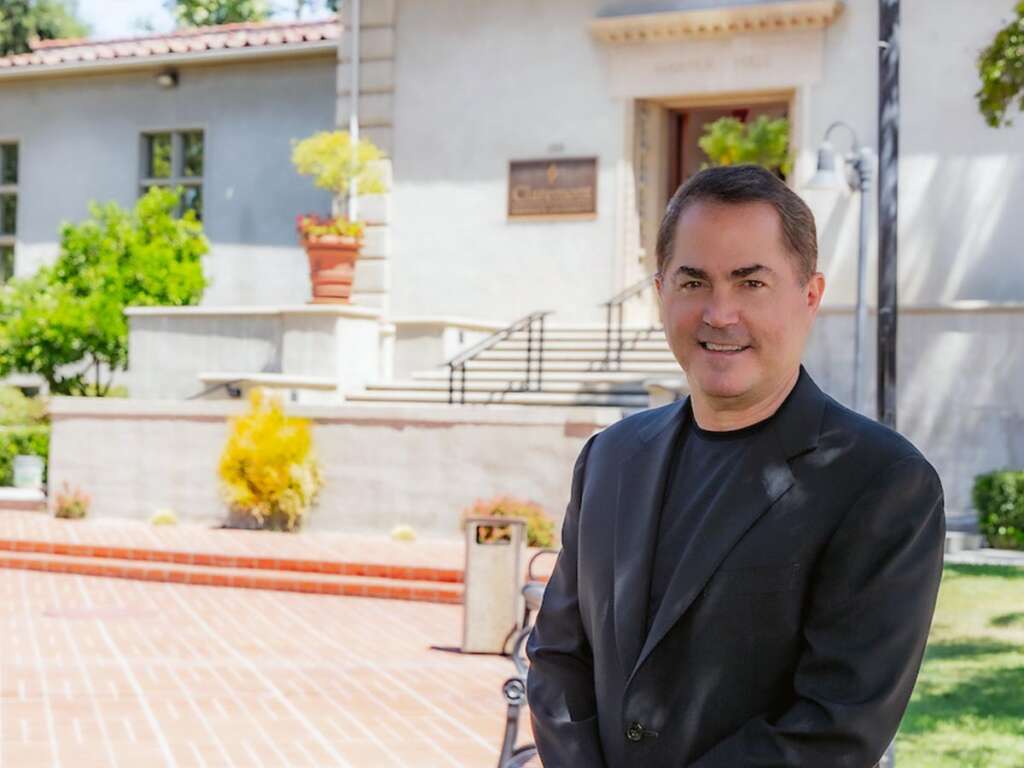
“The HealthATM project is a way to make interaction with personal health as easy as going to an ATM machine for money,” said Dr. Tom Horan, the lead on the project and Director of the Kay Center for E-Health Research.
“Not having health insurance doesn’t mean you don’t get sick – you do. In fact, sometimes people without insurance don’t get treated until they’re really sick, which makes treatment all the more expensive. Health IT can clear away some of the bureaucracy that’s strangling the health care industry right now.”
The nine-month pilot program will place interactive stations at four community clinics in Los Angeles County-including Long Beach-beginning in spring of 2009. Patients can log into the system and do a number of actions, such as schedule doctor visits, set up electronic reminders for health promotion activities, monitor health condition improvements, or order prescription medications.
“The idea is to put these HealthATMs into community clinics, so people without the internet at home have access to track their health,” Dr. Horan said. “Research has shown that those who are more active in managing their health affairs have more positive health outcomes.”
A key aspect of the HeathATM is to facilitate managing chronic health conditions, including through use of reminders that are sent to participants' mobile phones. Working in partnership with COPE Health Solutions, the field test will involve enrolling patients in a program that will utilize HealthATMs to assist in managing and tracking their health.
Dr. Horan said he hopes to someday see HealthATMs being used in health clinics and centers throughout the nation. It is much needed, as more than 50 million Americans are without health coverage and yet could benefit from using an easy to operate health management system such as HealthATM.
There is a dedicated research team at the Kay Center involved in the project. Doctoral student Nathan Botts is coordinating the effort as well as using the study for his dissertation topic. Other Kay Center associates involved include: Richard Burkhard, Sue Feldman, Aisha Noamani, Brian Thoms and Gary Richmond. Allen Miller (CEO) and Sarita Mohanty (Medical Director) at COPE Health Solutions are leading their partnership effort on the project.
The Kay Center for E-Health research is based at CGU’s School of Information Systems and Technology.
Founded in 1925, Claremont Graduate University is one of the top graduate schools in the United States. Our nine academic schools conduct leading-edge research and award masters and doctoral degrees in 22 disciplines. Because the world’s problems are not simple nor easily defined, diverse faculty and students research and study across the
traditional discipline boundaries to create new and practical solutions for the major problems plaguing our world. A Southern California based graduate school devoted entirely to graduate research and study, CGU boasts a low student-to-faculty ratio.