The MA in Psychology with a concentration in Applied Social Psychology gives you knowledge of social psychology with a specific focus on its application to intervention and policy in the real world of health behavior and social issues.
 The Applied Social Psychology curriculum explores contemporary research in the core areas of social psychology—influence and persuasion, attitudes and behavior, social and behavioral change, and group and intergroup processes. It integrates this research with applied research methods and evaluation science, focusing on the translational relevance of social psychology to health and social issues. Health behavior and other social issues are significant global social problems that are not only exploding foci of behavioral science research, but also an area where social psychological knowledge is applied to inform policy and intervention—for example, by institutions such as the National Science Foundation and the National Institutes of Health.
Program Highlights
- Our terminal MA program trains you to apply social psychology theory and research methods to an understanding of health behavior and societal issues, preparing you to inform policy aimed at prosocial interventions and behavioral change.
- Research is a core activity of our faculty and students; organized around 4 faculty labs and institutes (Health Psychology and Prevention Science Institute, Institute for Research on Social Issues, Social Identity Lab, Depression Lab), and faculty-led or -mentored research groups.
- Our projects include health and adolescent substance abuse, leadership and social change, societal extremism, social conflict and discrimination, LGBT issues, and volunteerism.
- This program is STEM designated, allowing international students who hold F-1 visas to apply for OPT work authorizations for a total of 36 months (an initial 1-year period and a 24-month OPT STEM extension) of paid work experience in the U.S. after graduation.
Colloquia and Conference Series
The social psychology program hosts several colloquia and conference series, including:
- The Social Socials, a biweekly research colloquium
- The Stauffer Colloquium series, which hosts an annual speaker
- The Claremont Symposium on Applied Social Psychology series, an annual conference that is subsequently published as a book
Program At-a-glance
-
48 units
required units
-
MA in Psychology
degree awarded
-
In Person
modality
-
Spring, Summer, Fall
program start
-
2 years | full time*
estimated completion time
Where You Can Find Our Alumni
-
Office of Institutional Effectiveness
Graduate Research Assistant
-
Catherine Ong Associates
Public Relations Associate
-
Navy Research Laboratory
Researcher
-
Freelance
UX Designer and Researcher
Faculty
-
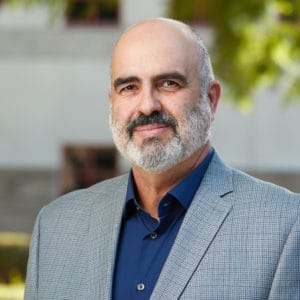
Eusebio Alvaro
Full Research Professor
Research Interests
Social Influence Processes, Health Promotion, Disease Prevention & Medicine
-

William Crano
Stuart Oskamp Chair of Psychology
Research Interests
Social Influence, Effects of persuasive information on drug addiction and HIV/AIDS, Minority and majority relationships to health information
-

Michael Hogg
Distinguished Professor Emeritus of Social Psychology
Research Interests
Self and Social Identity; Intergroup Relations and Group Processes; Influence and Leadership; Uncertainty, Radicalization and Extremism; Intergroup Communication
-

P. Wesley Schultz
Full Research Professor
Research Interests
Environmental psychology, social psychology, conservation, sustainability, social influence, quantitative methods, big data
-
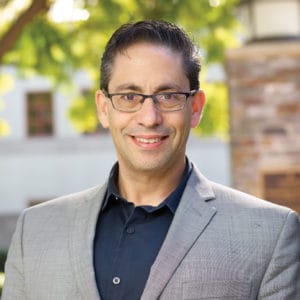
Jason T. Siegel
Professor of Psychology
Research Interests
Social Psychology, Health Psychology, Persuasion, Survey Research
-

Anna Woodcock
Associate Research Professor
Research Interests
Identity, Identity balance, Stereotypes, Diversity, STEM, Prejudice, Longitudinal Research, Quasi-Experimental Research, Intervention Evaluation, Theory-driven Interventions, Implicit Bias, Implicit identities
Extended Faculty
-
Mark Costanzo
Claremont McKenna College
Research Interests
Death penalty, expert testimony, non-verbal communication, social psychology
-
Jennifer Feitosa
Claremont McKenna College
Research Interests
Culture, Diversity, Organizational Psychology, Statistics, Teams, Teamwork, Workplace Issues and Trends
-
Allen Omoto
Pitzer College
Research Interests
Social psychology; volunteerism and prosocial action; environmental concerns; lesbian, gay, bisexual, and transgender issues; sense of community; civic engagement and civil society
-
Adam Pearson
Pomona College
Research Interests
Social psychology of sustainability and climate change, social cognition, intergroup relations, disparities, stereotyping and prejudice
-
Robin Vallacher
Florida Atlantic University
Research Interests
Dynamical social psychology, action identification, social judgment, self-concept, interpersonal dynamics, conflict and social justice
Curriculum
16 units in Social Psychology: Health and Social Issues
Year 1: Foundations & Principles of Change
- Overview of social psychology (4 units)
- Applying principles of social and behavioral change (4 units)
Year 2: Group behavior & Intervention development
- Applying principles of group influences (4 units)
- Intervention development (4 units)
22 units in Applied Research Methods (12 units) and Evaluation (10 units)
All students take these existing courses which are also taken by other MA students:
- Intermediate statistics (2 units)
- Analysis of variance (2 units)
- Applied multiple regression (2 units)
- Categorical data analysis (2 units)
- Research methods (4 units)
- Foundations of evaluation (2 units)
- Comparative evaluation theory (4 units)
- Evaluation procedures (4 units)
10 units of electives
Students chose 10 units of electives from across the department’s offerings. Those focused on health might consider offerings from the School of Community & Global Health, and students more broadly interested in social change might consider offerings from the social sciences or religion. Since this is an applied MA the department may consider providing oversight for internship opportunities. Students who are considering subsequently applying for a PhD program, at Claremont Graduate University or elsewhere, will be encouraged to attend a relevant lab or enroll in a research practicum as an elective.
Application Guidelines
| University Requirements | |
|---|---|
| Application Fee | $80 (fee is non-refundable) |
| Official Transcripts | Undergraduate/graduate Applicants must submit a sealed, official transcript from every undergraduate and graduate institution that has granted the applicant a degree. Electronic transcripts sent to admissions@cgu.edu are also accepted. For undergraduate coursework, applicants are required to submit proof of a completed bachelor’s degree from a regionally accredited college or university. Unofficial copies of transcripts are accepted for review purposes, but official copies will be required upon admission. Applicants currently earning a degree that will be completed prior to attending CGU are required to submit a transcript showing work in progress for evaluation purposes. Once the degree has been granted, a final official transcript documenting the degree conferred must be submitted to CGU. International applicants are advised to review the International Transcript Guidelines for additional information on submitting international transcripts. |
| English Proficiency Exam | Required (international applicants only) A valid score on one of the following examinations TOEFL, IELTS, Pearson PTE, Duolingo English Test is required of all non-native English-speaking applicants. The examination is not required for the following applicants:
CGU’s school code for the TOEFL exam is 4053. International applicants are encouraged to visit our International Applicants page for more information, including score requirements. |
| Resume | Applicants must submit an up-to-date copy of their resume. |
| Program Requirements | |
|---|---|
| Statement of Purpose | Please submit a 2-3 page statement of purpose that details your academic and/or professional achievements, your specific areas of research interest within your desired field of study, why you are a strong candidate for graduate studies at CGU, and your career goals. |
| Letter of Recommendation | 2 letters required When filling out the online application, please enter references acquainted with your potential for success who will submit a written recommendation on your behalf. In most academic departments, references from faculty members who can speak to your academic ability are preferred; applicants with substantial work experience may request professional references. Please do not enter family members as references. You will be required to input information for your recommenders (whether they are submitting online or not) in the “Recommendations” section of the online application. Please follow the directions in this section carefully before clicking on “Recommendation Provider List” to input the names and contact information for each recommender. You will have an opportunity to indicate if the reference writer will be submitting online. These reference writers will receive an email from CGU with instructions on submitting an online recommendation. Recommenders who are indicated as offline will not receive an email from CGU with instructions to submit. These reference writers can submit via traditional mail and should use the supplemental New Student Recommendation Form. Recommenders can also email their letter of recommendation to the Office of Admissions at admissions@cgu.edu. |
| Standardized Test Scores | GRE (optional) Standardized test scores are not required in order to apply for this program. Applicants who have taken the Graduate Record Examinations (GRE) General Test are invited to submit scores, but are not required to do so. Applicants who feel that their Grade Point Averages do not adequately represent their ability to succeed in a graduate program may find it helpful to submit GRE scores for consideration. CGU’s school code: |
Key Dates & Deadlines
CGU operates on a priority deadline cycle. Applicants are strongly encouraged to submit complete applications by the priority dates in order to assure maximum consideration for both admission and fellowships.
Once the priority deadlines have passed, the University will continue to review applications for qualified candidates on a competitive, space-available basis. The final deadlines listed are the last date the University can accept an application in order to allow sufficient time to complete the admissions, financial aid, and other enrollment processes.
Spring 2026
Priority Deadline – November 1, 2025
Final Deadline (International) – November 15, 2025
Final Deadline (Domestic) – December 1, 2025
Classes begin – January 20, 2026
Summer 2026
Priority Deadline – February 1, 2026
Final Deadline (International) – March 1, 2026
Final Deadline (Domestic) – April 1, 2026
Classes begin – May 18, 2026
Fall 2026
Priority Deadline – February 1, 2026
Final Deadline (International) – July 5, 2026
Final Deadline (Domestic) – August 1, 2026
Classes begin – August 24, 2026
Cost & Aid
ESTIMATED TUITION (CALIFORNIA RESIDENTS, NON-RESIDENTS, INTERNATIONAL)
*Based on 2025-2026 tuition rates.
STUDENT FEES (PER SEMESTER)
| $245 Student Fee |
| $150 Technology Fee |
| International Student Services Fee**: $802 fall semester, $898 spring semester **Applies to all international students (F-1 visa only) who are registered in coursework, doctoral study, or continuous registration. The fee is assessed each fall and spring semester for annual ISO accident and sickness plans and administrative fees. Subject to changes. |
For estimates of room & board, books, etc., please download CGU’s Cost of Attendance 2025-2026.
| Program | 48 units |