- Lead the institutions you once navigated — Prepare to shape policy, student success strategies, and organizational change in higher education.
- Move from practitioner to thought leader — Develop the research and strategic perspective needed for executive or faculty roles.
- Generate New Knowledge – Demonstrate your ability to craft extensive, original dissertation research that makes a significant contribution to the field of education.
- Lead with a full view of the student journey — Master access, retention, engagement, and success at an institutional level.
- Cultivate your network – Develop meaningful relationships with colleagues, mentors, and advisors who enrich your career.
- Influence how colleges operate — Study policy, governance, and systems that shape higher education outcomes.
- Advance equity with intention and scale — Focus your work on improving outcomes for diverse student populations.
- Position yourself for senior roles — From dean-level leadership to faculty appointments and policy influence.
The PhD (Doctor of Philosophy) in Education with a concentration in Higher Education & Student Affairs reflects the School of Educational Studies’ mission to prepare leaders who drive positive change through education, research, and practice. Grounded in a commitment to educational equity, social justice, and impact, the program develops scholar-practitioners who understand higher education institutions not only as systems to be studied—but as powerful sites for transformation.
Through a transdisciplinary approach, students examine the histories, structures, policies, and practices of colleges and universities while engaging critical questions about access, equity, leadership, and institutional effectiveness. Whether pursuing careers as faculty, researchers, or senior leaders, students are prepared to generate new knowledge and apply it to the most pressing challenges facing higher education today.
We recognize that higher education institutions both reflect and shape society. This program equips students to confront inequities within these systems while advancing practices that promote inclusion, belonging, and community well-being. With a strong emphasis on mentorship, collaboration, and applied research, students work closely with faculty to align their academic journey with their professional goals and impact.
Designed for working professionals, courses are offered at accessible times, and students join a dynamic network of alumni and leaders committed to a shared dedication to equity, integrity, and meaningful change. Graduates emerge as thoughtful, equity-driven leaders—ready to shape policy, lead institutions, and reimagine higher education in service of a more just and inclusive world.
Program At-a-glance
-
72 units
required units
-
PhD in Education
degree awarded
-
Hybrid
modality
-
Spring, Summer, Fall
program start
-
4 years | full time*
estimated completion time
7 years | part time
estimated completion time
Where You Can Find Our Alumni
-
Los Angeles City College
President
-
National Association for College Admission Counseling
CEO
-
Azusa Pacific University
Associate Provost for Student Success
-
University of California, San Diego
Assistant Vice Chancellor, Student Affairs
-
Nebraska Children and Families Foundation
Senior Vice President of Strategic Engagement & Initiatives
-
California State University, San Bernardino
Director, Watson & Associates Literary Center
-
Fresno Pacific University
President
-
Santa Monica College
Dean of Enrollment Services
Faculty
-
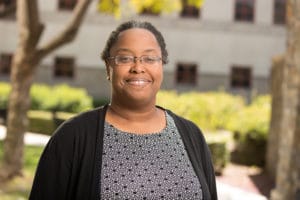
Deborah Faye Carter
Associate Professor of Higher Education
Research Interests
Higher education; transition to college; college student outcomes; access to college; race in education; mentoring, equity, and diverse learning environments in STEM
-

DeLacy Ganley
Dean, School of Educational Studies
Professor of EducationResearch Interests
Culturally relevant education; resiliency and achievement of marginalized populations; intersection of families, community, and school; language acquisition; social capital theory; systems theory
-

Dina C. Maramba
Professor of Education
Research Interests
Equity and diversity issues in higher education; theory and practice in student affairs; college student development; access and retention; first-generation college students; Asian American and Pacific Islander populations; minority serving institutions
-

Frances Marie Gipson
Clinical Professor of Education
Director, Urban Leadership ProgramResearch Interests
Urban schooling; distributed leadership; social-emotional learning; culturally relevant and linguistically responsive education; systems theory; learning and achievement; talent and leadership development; P-20 school policy
-
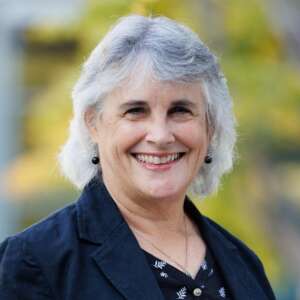
Gwen Garrison
Clinical Professor of Education
Director of Educational Evaluation and Data Analysis
Research Interests
Organizational effectiveness; diversity & inclusion; research & evaluation process; data systems; data management; data visualization and storytelling
-
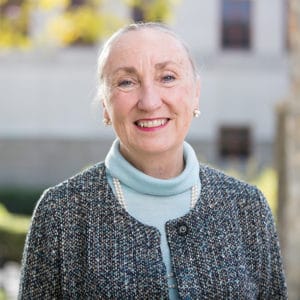
Mary Simpson Poplin
Senior Research Fellow
Professor EmeritaResearch Interests
Highly effective teachers in Los Angeles area; effective teaching methods; students, schools and poverty; differences between Judeo Christian and secular thought; Mother Teresa (worked with her in 1996)
-
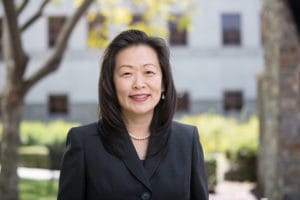
Susan J. Paik
Professor of Education
Research Interests
Educational productivity; talent and leader development; giftedness and creativity; learning and achievement; psychosocial and environmental factors; urban and international studies; underserved students; Asian Americans and education; family-school-community partnerships; research methods, design, and evaluation
-

Tom Luschei
Professor of Education
Research Interests
International and Comparative Education; Economics of Education; Teacher Quality, Teacher Policy, and Teacher Distribution; Education Policy across the Americas
-
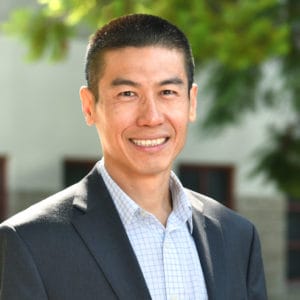
Guan K. Saw
Associate Professor, Joseph B. Platt Chair in Management of Technology
Research Interests
Educational inequality; STEM education and workforce; rural education; college access and success; social capital; mentorship; teacher victimization; health disparities; research methodology
Curriculum
Program Features
- You will take an introductory course, Proseminar for Doctoral Study, designed to orientate you to doctoral study. Toward the end of your program, you will take another course, Capstone for Doctoral Research, to prepare you for the move from coursework into doctoral research and dissertation writing.
- Sample research and methods courses include: Introduction to Educational Evaluation, Assessment & Effectiveness, Introduction/Advanced Qualitative Inquiry, Introduction/Advanced Quantitative Research Methods, Research Methods & Design, Community-based Participatory Research – Focus on Transformative Movement Organizing, Research Practicum
- CGU embraces transdisciplinary learning and thinking. To foster the ability to communicate across discipline areas, you will take at least one transdisciplinary course.
Below are all examples of typical SES 4-unit course offerings. It does not include all SES courses.
- EDUC 457. Economics & Finance of Higher Education
- EDUC 460. Foundations of Student Affairs in Higher Education
- EDUC 519. Higher Education & Democracy
- EDUC 548. Higher Education and the Law
- EDUC 578. Minority Serving Institutions in Higher Education
- EDUC 594. Historical & Contemporary Issues in Community Colleges
- EDUC 657. Access & Equity in Higher Education
Application Guidelines
| University Requirements | |
|---|---|
| Application Fee | $80 (fee is non-refundable) |
| Official Transcripts | Undergraduate/graduate Applicants must submit a sealed, official transcript from every undergraduate and graduate institution that has granted the applicant a degree. Electronic transcripts sent to admissions@cgu.edu are also accepted. For undergraduate coursework, applicants are required to submit proof of a completed bachelor’s degree from a regionally accredited college or university. Unofficial copies of transcripts are accepted for review purposes, but official copies will be required upon admission. Applicants currently earning a degree that will be completed prior to attending CGU are required to submit a transcript showing work in progress for evaluation purposes. Once the degree has been granted, a final official transcript documenting the degree conferred must be submitted to CGU. International applicants are advised to review the International Transcript Guidelines for additional information on submitting international transcripts. |
| English Proficiency Exam | Required (international applicants only) A valid score on one of the following examinations TOEFL, IELTS, Pearson PTE, Duolingo English Test is required of all non-native English-speaking applicants. The examination is not required for the following applicants:
CGU’s school code for the TOEFL exam is 4053. International applicants are encouraged to visit our International Applicants page for more information, including score requirements. |
| Resume | Applicants must submit an up-to-date copy of their resume. |
| Program Requirements | |
|---|---|
| Statement of Purpose | Please submit a five-page, double-spaced personal statement that answers the following questions: 1. Who are you? |
| Letter of Recommendation | 3 letters required When filling out the online application, please enter references acquainted with your potential for success who will submit a written recommendation on your behalf. In most academic departments, references from faculty members who can speak to your academic ability are preferred; applicants with substantial work experience may request professional references. Please do not enter family members as references. You will be required to input information for your recommenders (whether they are submitting online or not) in the “Recommendations” section of the online application. Please follow the directions in this section carefully before clicking on “Recommendation Provider List” to input the names and contact information for each recommender. You will have an opportunity to indicate if the reference writer will be submitting online. These reference writers will receive an email from CGU with instructions on submitting an online recommendation. Recommenders who are indicated as offline will not receive an email from CGU with instructions to submit. These reference writers can submit via traditional mail and should use the supplemental New Student Recommendation Form. Recommenders can also email their letter of recommendation to the Office of Admissions at admissions@cgu.edu. |
| Standardized Test Scores | GRE (optional) Applicants who have taken the Graduate Record Examinations (GRE) General Test are invited to submit scores but are not required to do so. Applicants who feel that their Grade Point Averages do not adequately represent their ability to succeed in a graduate program may find it helpful to submit GRE scores for consideration. CGU’s school code: |
Key Dates & Deadlines
CGU operates on a priority deadline cycle. Applicants are strongly encouraged to submit complete applications by the priority dates in order to assure maximum consideration for both admission and fellowships.
Once the priority deadlines have passed, the University will continue to review applications for qualified candidates on a competitive, space-available basis. The final deadlines listed are the last date the University can accept an application in order to allow sufficient time to complete the admissions, financial aid, and other enrollment processes.
Spring 2027
Priority Deadline – November 1, 2026
Final Deadline (International) – November 15, 2026
Final Deadline (Domestic) – December 1, 2026
Classes begin – January 19, 2027
Summer 2027
Priority Deadline: February 1, 2027
Final Deadline (International) – March 1, 2027
Final Deadline (Domestic) – April 1, 2027
Classes Begin: May 17, 2027
Fall 2027
Priority Deadline: February 1, 2027
Final Deadline (International) – June 1, 2027
Final Deadline (Domestic) – August 1, 2027
Classes Begin: August 30, 2027
Cost & Aid
ESTIMATED TUITION (CALIFORNIA RESIDENTS, NON-RESIDENTS, INTERNATIONAL)
*Based on 2025-2026 tuition rates.
STUDENT FEES (PER SEMESTER)
| $245 Student Fee |
| $150 Technology Fee |
| International Student Services Fee**: $802 fall semester, $898 spring semester **Applies to all international students (F-1 visa only) who are registered in coursework, doctoral study, or continuous registration. The fee is assessed each fall and spring semester for annual ISO accident and sickness plans and administrative fees. Subject to changes. |
For estimates of room & board, books, etc., please download CGU’s Cost of Attendance 2025-2026.
| Program | 72 units |