The Master of Arts in Islamic Studies examines Islam’s relation to other religious traditions and the contemporary debates and issues concerning Muslims globally.
From its inception to its place among contemporary nations and religions, Islam and its global identity are central areas of study in this unique master’s program. You will examine leading Islamic scholarship and gain broad understanding of Islam’s scriptural texts. A focus on the development of Islamic thought through the primary domains of Islamic literature—theology, philosophy, and mysticism—will enable you to understand the religion’s socio-historical, political, and cultural frameworks, a holistic view merging past and present perspectives. You will also address the relation of Islam to other religions by taking comparative courses in Christianity and Judaism. This program provides excellent background preparation for a doctoral degree in religion or to pursue a variety of careers in government, international corporations, media outlets and non-profit organizations.
Program Highlights
- The MA in Islamic Studies offers three tracks of study: Quranic Studies; Sexuality, Gender, and Feminist Studies in Islam; and Environmental Studies in Islam.
- Interdisciplinary concentrations are available to Religion students, including American Studies, Early Modern Studies, Hemispheric & Transnational Studies, Media Studies, and Museum Studies.
- You will have access to the libraries of CGU and Claremont University Consortium which offer more than two million volumes – more than 250,000 in the field of religion alone.
Program At-a-glance
-
40 units
required units
-
MA in Islamic Studies
degree awarded
-
In Person
modality
-
Spring, Fall
program start
-
2 years | full time*
estimated completion time
Areas of Concentration
-
American Studies
The American Studies concentration takes a multidisciplinary approach to the study of United States culture, society, civilization, and identity through the curricular lenses of history, literature, critical theory, and more.
-
Early Modern Studies
The Early Modern Studies concentration undertakes interdisciplinary examination of history, culture, politics, and society within the transitional and transformative period that stretched between Medieval and modern societies, marked especially by the advent of print, Christian confessional war, and the rise of the modern state.
-
Hemispheric & Transnational Studies
A comparative analysis of culture in the Americas, the concentration in Hemispheric & Transnational Studies explores how scholarship on the Atlantic, borderlands, and diaspora have reshaped U.S. American Studies, Caribbean Studies, and Latin American Studies, emphasizing the topics of empire, race, religion, and revolution.
-
Media Studies
Situated at the bustling intersection of cultural studies, new media, critical theory, and popular culture, the burgeoning field of Media Studies examines the creative and critical practices of media consumers, producers, artists, and scholars, focusing on questions of representation, power, technology, politics, and economy.
-
Museum Studies
The Museum Studies concentration investigates the history and political role of museums in society, the interpretation and display of a wide variety of cultural productions, and topics of special concern to museums as cultural organizations, using a multidisciplinary, practice-based approach to understand the historical development of this evolving field.
Where You Can Find Our Alumni
-
Cal Poly, San Luis Obispo
Professor of Philosophy
-
Ursuline College
Dean
-
Baker University
Assistant Professor of Religious Studies
-
Bayan Claremont
Assistant Professor of Muslim Studies
-
Baker University
Curator
Faculty
-
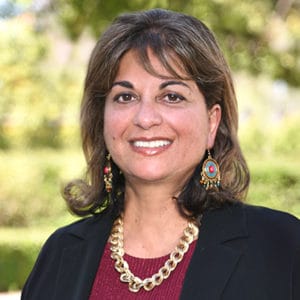
Ruqayya Y. Khan
Professor of Religion
Malas Chair of Islamic StudiesResearch Interests
The Qur'an, Arabic literatures, progressive Islamic theologies, women in Islam, Islam and environmental ethics, Islam and the digital age, late antiquity and Islam, origins of Islam, cultures of Umayyad Damascus and Abbasid Baghdad
-
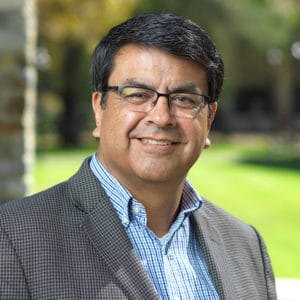
Daniel Ramírez
Associate Professor of Religion
Research Interests
American religious history; Latin American religious history; Religion, migration, and transnationalism; Religion in borderlands; Contemporary theories of religion
-

Tammi J. Schneider
Danforth Professor of Religion
Chair, Applied Gender Studies DepartmentResearch Interests
Ancient Near Eastern history, literature, archaeology, and religion;
Women in the Hebrew Bible
Curriculum
- 40 units of approved coursework
- Competency in intermediate Arabic (students may complete intermediate Arabic courses at other institutions and transfer up to 10 units to fulfill this requirement, OR students must pass a translation exam administered by the School of Arts & Humanities to fulfill the requirement)
- Research Tool: The requirement is fulfilled by passing a foreign language translation exam administered by the School of Arts & Humanities; in some cases, and with advisor approval, the Research Tool may be fulfilled by completing an approved research methods course.
- Thesis
Tracks of Study Sample Courses
Quranic Studies
- Introduction to Islamic Studies
- Classical Arabic Literature & the Qur’an
- Feminism & Quranic Studies
- Western Quranic Studies
- Scripturalization Seminar
- Comparative Religion Seminar
Environmental Studies in Islam
- Introduction to Islamic Studies
- Environmental Ethics & Mystical Traditions in Islam
- Islamic Cosmology & Mysticism
- Divine Body: Religion & the Environment
- Islamic Philosophy
Sexuality, Gender & Feminist Studies in Islam
- Introduction to Islamic Studies
- Engendering & Experience: Women in the Islamic Tradition
- Gender & Sexuality in North Africa: Mernissi, al-Sadaawi & Djebar
- Contemporary Issues in Gender & Islam
- Seminar in Sexuality & Religion
- Feminist Approaches to the Genre, Wives of the Prophet
Application Guidelines
| University Requirements | |
|---|---|
| Application Fee | $80 (fee is non-refundable) |
| Official Transcripts | Undergraduate/graduate Applicants must submit a sealed, official transcript from every undergraduate and graduate institution that has granted the applicant a degree. Electronic transcripts sent to admissions@cgu.edu are also accepted. For undergraduate coursework, applicants are required to submit proof of a completed bachelor’s degree from a regionally accredited college or university. Unofficial copies of transcripts are accepted for review purposes, but official copies will be required upon admission. Applicants currently earning a degree that will be completed prior to attending CGU are required to submit a transcript showing work in progress for evaluation purposes. Once the degree has been granted, a final official transcript documenting the degree conferred must be submitted to CGU. International applicants are advised to review the International Transcript Guidelines for additional information on submitting international transcripts. |
| English Proficiency Exam | Required (international applicants only) A valid score on one of the following examinations TOEFL, IELTS, Pearson PTE, Duolingo English Test is required of all non-native English-speaking applicants. The examination is not required for the following applicants:
CGU’s school code for the TOEFL exam is 4053. International applicants are encouraged to visit our International Applicants page for more information, including score requirements. |
| Resume | Applicants must submit an up-to-date copy of their resume. |
| Program Requirements | |
|---|---|
| Statement of Purpose | Please submit a 2-3 page statement of purpose that details your academic and/or professional achievements, your specific areas of research interest within your desired field of study, why you are a strong candidate for graduate studies at CGU, and your career goals. |
| Letter of Recommendation | 3 letters required When filling out the online application, please enter references acquainted with your potential for success who will submit a written recommendation on your behalf. In most academic departments, references from faculty members who can speak to your academic ability are preferred; applicants with substantial work experience may request professional references. Please do not enter family members as references. You will be required to input information for your recommenders (whether they are submitting online or not) in the “Recommendations” section of the online application. Please follow the directions in this section carefully before clicking on “Recommendation Provider List” to input the names and contact information for each recommender. You will have an opportunity to indicate if the reference writer will be submitting online. These reference writers will receive an email from CGU with instructions on submitting an online recommendation. Recommenders who are indicated as offline will not receive an email from CGU with instructions to submit. These reference writers can submit via traditional mail and should use the supplemental New Student Recommendation Form. Recommenders can also email their letter of recommendation to the Office of Admissions at admissions@cgu.edu. |
| Standardized Test Scores | GRE (optional) Applicants who have taken the Graduate Record Examinations (GRE) General Test are invited to submit scores but are not required to do so. Applicants who feel that their Grade Point Averages do not adequately represent their ability to succeed in a graduate program may find it helpful to submit GRE scores for consideration. CGU’s school code: |
| Writing Sample | All applicants are required to submit a writing sample of previous work in addition to the statement of purpose. You may submit samples of any length you feel indicate your writing ability, but please note that we will be unable to return any items submitted as part of your application (please, no books). Most applicants submit one or two scholarly papers or excerpts of around 10-15 pages. Writing samples should not exceed 30 pages. |
Key Dates & Deadlines
CGU operates on a priority deadline cycle. Applicants are strongly encouraged to submit complete applications by the priority dates in order to assure maximum consideration for both admission and fellowships.
Once the priority deadlines have passed, the University will continue to review applications for qualified candidates on a competitive, space-available basis. The final deadlines listed are the last date the University can accept an application in order to allow sufficient time to complete the admissions, financial aid, and other enrollment processes.
Fall 2027
Priority Deadline: February 1, 2027
Final Deadline (International) – June 1, 2027
Final Deadline (Domestic) – August 1, 2027
Classes Begin: August 30, 2027
Spring 2027
Priority Deadline – November 1, 2026
Final Deadline (International) – November 15, 2026
Final Deadline (Domestic) – December 1, 2026
Classes begin – January 19, 2027
Cost & Aid
ESTIMATED TUITION (CALIFORNIA RESIDENTS, NON-RESIDENTS, INTERNATIONAL)
*Based on 2025-2026 tuition rates.
STUDENT FEES (PER SEMESTER)
| $245 Student Fee |
| $150 Technology Fee |
| International Student Services Fee**: $802 fall semester, $898 spring semester **Applies to all international students (F-1 visa only) who are registered in coursework, doctoral study, or continuous registration. The fee is assessed each fall and spring semester for annual ISO accident and sickness plans and administrative fees. Subject to changes. |
For estimates of room & board, books, etc., please download CGU’s Cost of Attendance 2025-2026.
| Program | 40 units |
As a student in the School of Arts & Humanities, you have the option of completing one of five interdisciplinary concentrations.
American Studies
The American Studies concentration takes a multidisciplinary approach to the study of United States culture, society, civilization, and identity through the curricular lenses of history, literature, critical theory, and more.
Early Modern Studies
The Early Modern Studies concentration undertakes interdisciplinary examination of history, culture, politics, and society within the transitional and transformative period that stretched between Medieval and modern societies, marked especially by the advent of print, Christian confessional war, and the rise of the modern state.
Hemispheric & Transnational Studies
A comparative analysis of culture in the Americas, the concentration in Hemispheric & Transnational Studies explores how scholarship on the Atlantic, borderlands, and diaspora have reshaped U.S. American Studies, Caribbean Studies, and Latin American Studies, emphasizing the topics of empire, race, religion, and revolution.
Media Studies
Situated at the bustling intersection of cultural studies, new media, critical theory, and popular culture, the burgeoning field of Media Studies examines the creative and critical practices of media consumers, producers, artists, and scholars, focusing on questions of representation, power, technology, politics, and economy.
Museum Studies
The Museum Studies concentration investigates the history and political role of museums in society, the interpretation and display of a wide variety of cultural productions, and topics of special concern to museums as cultural organizations, using a multidisciplinary, practice-based approach to understand the historical development of this evolving field.
These concentrations are available for students pursuing the following degree programs:
Master’s Degrees
Doctoral Degrees