Faculty
-

Nicola Denzey Lewis
Professor of Religion
Margo L. Goldsmith Chair in Women’s Studies in ReligionResearch Interests
Social and Intellectual History of the Roman Empire, Gnosticism, Women’s Studies, Religion in the Roman Empire and Late Roman Empire, Late Antiquity
-

Ruqayya Y. Khan
Professor of Religion
Malas Chair of Islamic StudiesResearch Interests
The Qur'an, Arabic literatures, progressive Islamic theologies, women in Islam, Islam and environmental ethics, Islam and the digital age, late antiquity and Islam, origins of Islam, cultures of Umayyad Damascus and Abbasid Baghdad
-
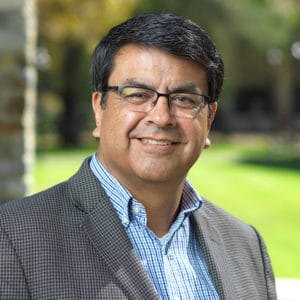
Daniel Ramírez
Associate Professor of Religion
Research Interests
American religious history; Latin American religious history; Religion, migration, and transnationalism; Religion in borderlands; Contemporary theories of religion
-

Tammi J. Schneider
Danforth Professor of Religion
Chair, Religion DepartmentResearch Interests
Ancient Near Eastern history, literature, archaeology, and religion;
Women in the Hebrew Bible
Extended Faculty
-
Ahmed Alwishah
Pitzer College
Research Interests
Islamic philosophy, Medieval philosophy, Philosophy of religion, Islamic theology
-
Myriam Chancy
Scripps College
Research Interests
African diaspora with specialization in its literature
-
Stephen T. Davis
Claremont McKenna College
Research Interests
Analytic theology, Christian thought, Metaphysics, Philosophy of religion
-
Lara Deeb
Scripps College
Research Interests
Politics of knowledge production, Gender and sexuality, Islam, Transnational feminism, The Middle East, especially Lebanon
-
Erika Dyson
Harvey Mudd College
Research Interests
Activism and religion, American religious history, Church and state, Occult religions, Religion and science
-
Gastón Espinosa
Claremont McKenna College
Research Interests
American religion & politics; Latino religions; Latino religions & politics; Pentecostal, charismatic, & liberation movements; Religion and the American presidency; Religion in the United States
-
Gary Gilbert
Claremont McKenna College
Research Interests
Bible, Christian-Jewish relations, Israel, Jesus, Jewish/Christian relations, Judaism, New Testament
-
Philip Zuckerman
Pitzer College
Research Interests
Secularity, Atheism, Apostasy, and Scandinavian culture
Application Guidelines
| Item | Description |
|---|---|
| Application Fee | $80 |
| Official Transcripts | Yes |
| Letters of Recommendation | 3 |
| Statement of Purpose | Yes |
| Resume | Yes |
| Academic Prerequisites | Master's Degree Required |
| Other Requirements | Writing sample, English proficiency exam |
CGU operates on a priority deadline cycle. Applicants are strongly encouraged to submit complete applications by the priority dates in order to assure maximum consideration for both admission and fellowships.
Once the priority deadlines have passed, the University will continue to review applications for qualified candidates on a competitive, space-available basis. The final deadlines listed are the last date the University can accept an application in order to allow sufficient time to complete the admissions, financial aid, and other enrollment processes.
Spring 2024
Priority Deadline – November 1, 2023
Final Deadline (International) – November 15, 2023
Final Deadline (Domestic) – December 1, 2023
Classes begin – January 16, 2024
Fall 2024
Priority Deadline – February 1, 2024
Final Deadline (International) – July 5, 2024
Final Deadline (Domestic) – August 1, 2024
Classes begin – August 26, 2024
Application Checklist
The Claremont Graduate University online application is hosted online by Slate Technolutions via a secure web server. You will create a username and password so that you can return to continue your application over several sessions and check your status after submission. After you submit your application, it is made available for review by our faculty and staff.
The application fee is non-refundable.
Applicants must submit a sealed, official transcript from every undergraduate and graduate institution that has granted the applicant a degree. Electronic transcripts sent to admissions@cgu.edu are also accepted. For undergraduate coursework, applicants are required to submit proof of a completed bachelor’s degree from a regionally accredited college or university. Unofficial copies of transcripts are accepted for review purposes, but official copies will be required upon admission.
Applicants currently earning a degree that will be completed prior to attending CGU are required to submit a transcript showing work in progress for evaluation purposes. Once the degree has been granted, a final official transcript documenting the degree conferred must be submitted to CGU.
International applicants are advised to review the International Transcript Guidelines for additional information on submitting international transcripts.
Applicants must submit an up-to-date copy of their resume.
A valid score on one of the following examinations TOEFL, IELTS, Pearson PTE scores is required of all non-native English-speaking applicants. The examination is not required for the following applicants:
- Citizens or permanent residents of countries where English is the sole official language of instruction, e.g., Australia, Bahamas, Barbados, Canada (except Quebec), England, Ghana, Ireland, Jamaica, Kenya, New Zealand, Nigeria, Scotland, St. Vincent and the Grenadines, Trinidad, Tobago, Uganda, and Wales (see the CGU Bulletin for a complete list of accepted countries).
- Applicants who hold an undergraduate or advanced degree, or will have earned such a degree prior to enrolling at CGU, from an institution in the US or in countries where English is the sole official language of instruction (see above).
- Applicants who have successfully completed an academic English pre-master’s or intensive graduate bridge program from a nationally recognized, regionally accredited four-year college or university in the United States in the last two years, with submitted evidence of successful completion, and subject to curriculum approval.
CGU’s school code for the TOEFL exam is 4053.
International applicants are encouraged to visit our International Applicants page for more information, including score requirements.
When filling out the online application, please enter references acquainted with your potential for success who will submit a written recommendation on your behalf. In most academic departments, references from faculty members who can speak to your academic ability are preferred; applicants with substantial work experience may request professional references. Please do not enter family members as references.
You will be required to input information for your recommenders (whether they are submitting online or not) in the “Recommendations” section of the online application. Please follow the directions in this section carefully before clicking on “Recommendation Provider List” to input the names and contact information for each recommender. You will have an opportunity to indicate if the reference writer will be submitting online. These reference writers will receive an email from CGU with instructions on submitting an online recommendation.
Recommenders who are indicated as offline will not receive an email from CGU with instructions to submit. These reference writers can submit via traditional mail and should use the supplemental New Student Recommendation Form. Recommenders can also email their letter of recommendation to the Office of Admissions at admissions@cgu.edu.
Please submit a 2-3 page statement of purpose that details your academic and/or professional achievements, your specific areas of research interest within your desired field of study, why you are a strong candidate for graduate studies at CGU, and your career goals.
All applicants are required to submit a writing sample of previous work in addition to the statement of purpose. You may submit samples of any length you feel indicate your writing ability, but please note that we will be unable to return any items submitted as part of your application (please, no books). Most applicants submit one or two scholarly papers or excerpts of around 10-15 pages. Writing samples should not exceed 30 pages.
Cost & Aid
ESTIMATED TUITION (CALIFORNIA RESIDENTS, NON-RESIDENTS, INTERNATIONAL)
| Program | 72 units |
| Tuition per unit* | $2,020 |
*Based on 2023-2024 tuition rates.
STUDENT FEES (PER SEMESTER)
| $245 Student Fee |
| $150 Technology Fee |
| International Student Services Fee*: $661 fall semester, $776 spring semester **Applies to all international students (F-1 visa only) who are registered in coursework, doctoral study, or continuous registration. The fee is assessed each fall and spring semester for annual ISO accident and sickness plans and administrative fees. Subject to change. |
For estimates of room & board, books, etc., please download CGU’s Cost of Attendance 2022-2023 .